
Brian Roemmele | 15 SEP 2026
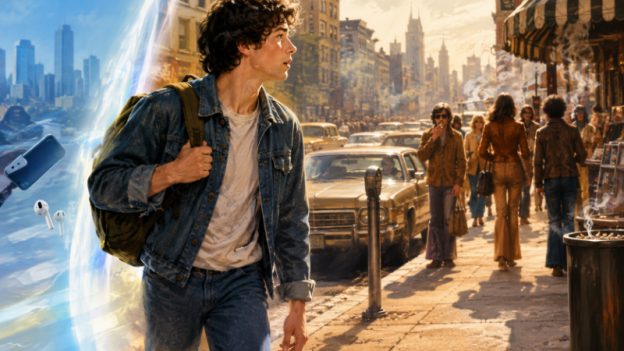
Drop a twenty-year-old from 2026 into 1976 and the body will not revolt. The eyes still focus. The lungs still pull air. The legs still know how to walk into a room and sit down without asking a screen for permission. The shock is not the missing rectangle in the pocket. The shock is that the entire social operating system has been rewritten, and nobody left a README.
The first week is slapstick dressed as ordinary life. You walk into a hospital and the air tastes like a bar at last call. Nurses light up at the station between charts. An ashtray sits on the nightstand like a Bible. The gift shop sells cigarettes next to greeting cards and cheap cologne. A doctor can deliver a diagnosis with a cigarette between his fingers and no one flinches. This is not rebellion. This is furniture. Public life has a permanent haze, a film of ash and odor that settles on clothes, hair, and the back of the throat. Offices, airplanes, grocery aisles, waiting rooms: smoke is not a vice in the corner. It is the atmosphere.
Then the information tax arrives, and it is heavier than the smoke. Curiosity used to be a swipe. In 1976 it is a pilgrimage. A specialized fact means a car, a parking meter, a library that closes at a real hour, a wooden card catalog with drawers that stick, and a book that may already be in someone else’s backpack. You learn the particular humiliation of finding the right card and the empty shelf behind it. There is no second tab. There is no “people also asked.” There is only the walk back to the car and the decision to try again tomorrow.
Navigation is not a blue line that forgives you. It is a folded atlas that fights you in the passenger seat, a memory of landmarks, or a stranger you have to look in the eye and ask, “Which way to the freeway?” Getting lost is not a comic interlude with a reroute. It is an evening. Running late is not a text from the parking lot. It is a ruined night, an empty seat, a friend who waited ten minutes and left because that was what people did.
Communication is a pact with a clock and a place. Meet at the theater at 7:00 and 7:00 is the law. The house phone rings in an empty kitchen and the call simply dies. An answering machine is a luxury item, not a birthright. You relearn planning the way a sailor relearns weather: by paying for every mistake. Plans are made days ahead, written down, confirmed once, and then trusted. If the other person is not there, you do not ping them. You stand under the marquee and decide whether to wait or walk away. That decision has weight because there is no soft landing afterward.
The city itself has a chemical aftertaste. Leaded gasoline. Infant environmental law. Midday light the color of weak tea. New York and Los Angeles do not merely have air. They wear it. The skyline arrives through a brown filter. Your clothes pick up the day. Your sinuses keep a record. The sensory environment is not hostile so much as unedited. Nothing has been scrubbed for your comfort. The world assumes you will adapt to it, not the other way around.
And yet the transplant would not break. The biological hardware is identical. The friction lives entirely in the software of daily habits. Within a few months the thumb that once hunted for refresh would go quiet.
The reflex to check a pocket for a glowing slab would fade into a ghost itch and then into nothing. Boredom would crawl back into the room and do what it used to do: push a person toward a book, a garage, a long walk, a conversation that cannot be paused, rewound, or liked. Without the constant low-grade panic of being reachable, some of the time-travelers would call the silence loneliness. The sharper ones would call it oxygen. ■
This article originally published September 9, 20206t, on X. Republished here by permission of the author.

Read more by Brian Roemmele.



.png)