
Mark Gresham | 6 NOV 2025
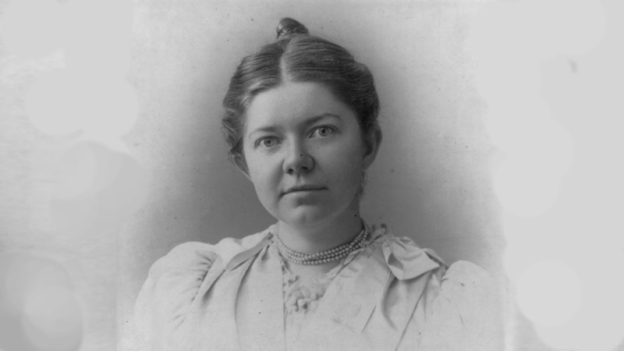
At a time when professional music in the United States was largely shaped by European training and traditions, Amy Beach became one of the first American women to achieve national recognition as a composer of large-scale classical works. Her Gaelic Symphony, premiered by the Boston Symphony Orchestra in 1896, was the first symphony by an American woman performed by a major orchestra. The premiere placed her at the center of a cultural moment when American concert music was beginning to assert its own identity alongside the leading European composers of the late 19th century.
Amy Marcy Cheney was born in 1867 in Henniker, New Hampshire, and demonstrated exceptional musical ability from early childhood. Family accounts describe her singing harmonies before speaking in complete sentences and composing brief works at four years old. By seven, she was performing public recitals of Beethoven and Chopin.
When her family moved to Boston, she entered the city’s musical circles, which were dominated by composers and educators who would become known as the Second New England School—including John Knowles Paine, George Whitefield Chadwick, and Edward MacDowell. These figures encouraged a distinctly American concert tradition, and while Beach was largely self-taught in composition, her music was influenced by and in dialogue with this community of composers.
At 18, she married Dr. Henry Harris Aubrey Beach, a respected Boston physician 24 years her senior. The marriage provided social stability and allowed her to devote time to composing, but it limited her career as a pianist. Dr. Beach encouraged her creative work but asked that she restrict public performance. Without access to the formal composition instruction often given to male members of the Second New England School, she taught herself orchestration and counterpoint through textbooks and study of published scores. Reflecting later on her early training, she wrote, “One’s own mind must be one’s teacher,” a statement that underscored both necessity and determination.
The Gaelic Symphony brought Beach broad attention. Drawing on Irish and Scottish melodic inflections familiar within Boston’s immigrant communities, the work became one of the earliest American symphonies to incorporate folk material. Boston critic Philip Hale noted that the piece showed “not only talent, but power”—a striking assessment in an era when women’s compositions were often described as delicate or charming. Her symphony was ambitious, assertive, and structurally assured, aligning her with the Second New England School’s interest in establishing an American orchestral tradition.
Beach composed more than 300 works across her career, including chamber music, choral works, piano pieces, and additional orchestral scores. Her Piano Concerto (1899), which she performed as soloist, demonstrated both technical mastery and expressive range. Among her most enduring works are her art songs, including “The Year’s at the Spring,” a setting of a poem by Robert Browning. These songs were widely performed in American vocal recitals in the early 20th century.
Her career unfolded during a period of shifting cultural identity in the United States, a time when debates over immigration, national heritage, and women’s public roles intensified. Beach engaged directly with these ideas. In 1924, she wrote, “We must look to our own folk music for our musical development,” signaling a perspective that anticipated later American nationalist composers, yet emerged decades earlier from her immediate cultural environment.
The death of her husband in 1910 marked a new phase. Beach resumed public performance and spent several years in Europe, where her music often received more direct musical evaluation and less gendered commentary. Returning to the United States during World War I, she became a mentor to younger musicians and, in 1925, helped establish the Society of American Women Composers, advocating for greater professional opportunities for women in music.
Beach continued composing into the 1930s and remained active until her death in 1944. Though her music receded from mainstream concert life for decades, renewed interest in women composers and early American orchestral music has brought her work back into performance. Today, orchestras and chamber ensembles regularly program her Gaelic Symphony, Piano Concerto, and chamber works.
Her music stands as both an artistic achievement and a testament to perseverance. Positioned within the Second New England School yet distinct in her voice, Amy Beach contributed to the foundation of an American musical identity while breaking gender barriers that limited her contemporaries. At a time when the United States was defining its cultural voice, she insisted on being part of that conversation—and succeeded. ■


Read more by Mark Gresham.



.png)