

February 29 & March 2, 2024
Atlanta Symphony Hall, Woodruff Arts Center
Atlanta, Georgia – USA
Osmo Vänskä, conductor; Alexander Melnikov, piano.
Henry DORN: Transitions
Sergei PROKOFIEV: Piano Concerto No. 2 in G minor, Op. 16
Jean SIBELIUS: Symphony No. 3 in C major, Op. 52
Mark Gresham | 4 MAR 2024
This past Thursday’s concert by the Atlanta Symphony Orchestra, led by guest conductor Osmo Vänskä and featuring pianist Alexander Melnikov as featured soloist, was impressive from start to finish.
The program opened with Transitions, composed in 2019 by Henry Dorn. Vänskä and the Minnesota Orchestra premiered the work in 2022. Dorn holds two Doctor of Musical Arts degrees from Michigan State University (in wind conducting and composition) and, since last August, has been on the faculty of St. Olaf College in Northfield, Minnesota as assistant professor of conducting and composition, and conductor of the award-winning St. Olaf Band.
In July 2017, Henry Dorn’s mother succumbed to cancer after a prolonged battle against the disease. Throughout her life, she faced numerous challenges with resilience, a trait that persisted until her final days as she grappled with the debilitating effects of lung cancer. Henry remained by her side during her hospitalization, documenting thoughts and reflections on her struggle and inner strength.
The impact of cancer, insidious and pervasive, left his mother physically diminished, rendering her once-vibrant spirit silent and subdued. In Transitions, the composer conveys the raw reality of the illness, eschewing romanticized notions of death for a portrayal of its harsh and relentless nature. A cacophony of musical motifs mirrors the invasive spread of the disease.
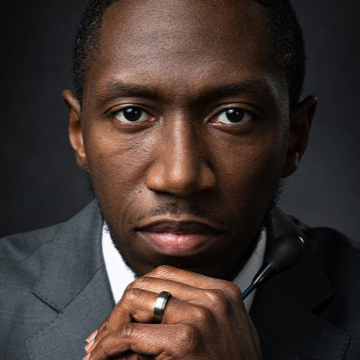
Composer and conductor Henry Dorn. (courtesy of ASO)
Amidst the chaos, the composer invokes moments of tranquility, reflecting on his mother’s enduring spirit and finding solace in memories of her humming melodies. Yet, the composition returns to the tumult of cancer, culminating in a crescendo symbolizing the impending end. As a tribute to his mother, the piece concludes with a poignant reference to her life, with the horns echoing her musical legacy as a former hornist.
Even if one were unaware of Dorn’s intensive story behind composing Transitions, the work is impressive purely on abstract musical grounds. It is a well-crafted, complex, and emotionally driven work with a convincing dramatic arc. The thought that followed in my mind immediately after was that Transitions would be excellent in a transcription for a highly accomplished symphonic wind band, especially given Dorn’s background at Michigan State University, which has long been esteemed for its wind ensemble programs. No surprise: the composer’s website reveals that, indeed, there is a version for symphonic wind ensemble, with (unsurprisingly) a difficulty rating of Level 6 (“Very Advanced”). Transitions is a challenging piece that holds the attention.
Russian pianist Alexander Melnikov joined Vänskä and the ASO as soloist for the next piece, Prokofiev’s Piano Concerto No. 2, a showcase of dramatic expression and virtuosic skill across its four movements.
The opening movement (“Andantino—Allegretto”) begins with a somber theme reminiscent of fate, gradually building tension through the piano’s narrative passages and expansive melodies, with the soloist’s cadenza consuming nearly all of its latter half. The cadenza ends tumultuoso, but the piano relentlessly continues as the orchestra returns to join in for a powerful climax of eight bars marked by frenetic piano runs and orchestral turmoil, after which the music quickly drops in volume for a hauntingly quiet conclusion.
The “Vivace” Scherzo’s piano part is a lively virtuosic display of athleticism, while the “Intermezzo: Allegro moderato” that follows explores menacing and sardonic themes with forward-looking harmonies. The “Allegro tempestoso” finale, which also included an extensive cadenza, unleashes a tempest of furious piano runs and orchestral blasts, evoking a sense of relentless pursuit and tumultuous emotion through various musical landscapes, culminating in a ferocious and introspective conclusion that leaves a lasting impact on the listener.

Alexander Melnikov plays Prokofiev’s “Visions fugitives, Op. 22: XVII” as his encore. (credit: Rand Lines)
Melnikov proved a tremendous soloist—unflagging energy without extraneous body movement and a formidable technique without flamboyance.
In contrast, Melnikov chose a miniature by Prokofiev for his encore: the gentle, introspective Visions fugitives, Op. 22: XVII (“Poetico”). The gossamer, translucent piece was there and gone in a mere one-and-a-half minutes.
Throughout Thursday’s performance, Vanska exhibited his mastery of conducting technique with a steady baton and skillful shaping gestures. His control over the orchestral sound was evident, resulting in a performance characterized by balanced dynamics, tight, cohesive playing, and insightful interpretation.
The pinnacle confirmation of this assessment came after intermission, with a performance of Jean Sibelius’ Symphony No. 3. This same Symphony was heard in Atlanta just last month at the Schwartz Center for Performing Arts, played by the touring National Symphony Orchestra of Ukraine, under the baton of Volodymyr Sirenko. That performance was praiseworthy, but here Vänskä and the Atlanta Symphony Orchestra gave us even more to admire.

Conductor Osmo Vänskä leads the Atlanta Symphony Orchestra in Sibelius’ “Symphony No. 3,
Feb 29, 2024. (credit:Rand Lines)
Like Sibelius, hailing from Finland, Vänskä’s affinity for the Symphony No. 3 was palpable throughout the piece. Of particular note: The woodwind passages were delicately balanced, exuding warmth and precision, while the horn section demonstrated exceptional intonation and accuracy. Vänskä’s attention to detail was meticulous yet unobtrusive, ensuring the overarching narrative of the music remained intact. His adept navigation of the piece is a testament to his understanding of the music’s trajectory.
Thursday’s concert served as a fine example of what the Atlanta Symphony Orchestra should (and does) sound like when led by an exemplary, well-seasoned conductor. ■
EXTERNAL LINKS:
- Atlanta Symphony Orchestra: aso.org
- Osmo Väskä: harrisonparrott.com/artists/osmo-vanska
- Alexander Melnikov: impresariat-simmenauer.de/en/artist/alexander-melnikov
- Henry Dorn: henryldorn.com

Read more by Mark Gresham.



.png)