

July 3, 2025
Soldiers & Sailors Memorial Hall
Pittsburgh, Pennsylvania – USA
“An Americana Concert”
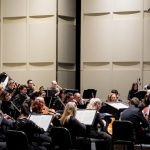
Pittsburgh Symphony Orchestra; Jacob Joyce, conductor, conductor; Katy Williams, soprano; Dennis O’Boyle, violin.
John Stafford SMITH/ arr. Joyce: The Star-Spangled Banner
Aaron COPLAND: Fanfare for the Common Man
Henri VIEUXTEAMPS: Souvenir d’Amérique (Yankee Doodle)
John WILLIAMS: Selections from Lincoln
John WILLIAMS: The Cowboys Overture
George WALKER: Lyric for Strings
John WILLIAMS: Midway March
Samuel WARD/arr. Richard Hayman: America the Beautiful
Bob LOWDEN (arr.): Armed Forces Salute
P. I. TCHAIKOVSKY – 1812 Overture (finale only)
John Philip SOUSA: The Stars and Stripes Forever
William Ford | 15 JUL 2025
Opened in 1910 to Henry Hornbostel’s Beaux-Arts design, Pittsburgh’s Soldiers & Sailors Memorial Hall honors Allegheny County veterans and houses a 2,300–2,500-seat auditorium whose long rectangular footprint, soaring intricately decorated ceiling, and hard plaster surfaces create a naturally resonant acoustic. It was this very resonance that convinced Pittsburgh Symphony Orchestra music director William Steinberg to record his celebrated 35 mm Everest and Command Classics sessions here in the early 1960s. He declared the hall “far superior” to the Syria Mosque, the orchestra’s former and far more acoustically limited home.
The stage is deep and uncovered—there’s no modern acoustic shell—so sound reflections bloom freely into the room instead of being focused narrowly toward the audience. Decorative murals flank the proscenium, and Abraham Lincoln’s Gettysburg Address is emblazoned on the upstage wall, silently reminding listeners of the hall’s memorial purpose.
Sightlines are the hall’s one compromise: the gently raked main floor can leave shorter patrons obscured by taller ones, and the balcony’s steep angle places upper-level listeners high above and to the sides of the stage.
From the very first spoken welcome, it was clear why Steinberg valued this space: announcements emerged with amplified ease, and every word was intelligible—an unusual feat in such a voluminous hall.
Copland’s Fanfare for the Common Man showed the space at full power. The lauded PSO brass projected with thrilling weight, and each percussive stroke landed with clarity and depth. That same blend of detail and warmth benefited George Walker’s gorgeous Lyric for Strings, where inner voices emerged clearly, and the violin and viola sections’ silken precision floated on just enough echo to enhance their blend without blurring articulation.
Solo moments sparkled too. Assistant principal second violinist Dennis O’Boyle tossed off Vieuxtemps’ witty and technically demanding Yankee Doodle variations with panache, the hall enriching his tone without compromising clarity.
The trio of John Williams selections packed cinematic punch: Lincoln’s noble brass chorales, The Cowboys Overture’s galloping energy, and Midway March’s swagger all benefited from Jacob Joyce’s tight rhythmic control and the hall’s ability to let tuttis bloom without turning brassy edges ragged.
Few pieces exploit grandeur like the finale of Tchaikovsky’s 1812 Overture. Here, actual cannons were replaced by emphatic bass drum strokes—solid wallops that resonated through the space like distant artillery. The concert closed with Sousa’s obligatory but ever-rousing The Stars and Stripes Forever, in which the PSO’s piccolos dazzled with pinpoint precision.

PSO associate conductor Jacob Joyce. (pittsburghsymphony.org)
PSO associate conductor Jacob Joyce led with crisp beats, sensible tempi, and an unerring ear for balance—no easy task in a hall that can magnify small missteps. Brass never buried the strings, and Katy Williams’ bright soprano soared clearly above the ensemble in America the Beautiful and the Armed Forces Salute.
Acoustically, Soldiers & Sailors Memorial Hall remains one of Pittsburgh’s treasures: just enough reverberation to add luster, just enough clarity to preserve detail, and a historic character that echoes in every measure. While its seating rake and balcony angles are less than ideal, the sonic rewards more than compensate—and Thursday night’s Americana celebration proved why this storied room continues to inspire musicians and audiences alike.
One final note: The building had a cinematic cameo as the holding area for a masked Hannibal Lecter in The Silence of the Lambs—a nod to its equally dramatic visual presence. ■
EXTERNAL LINKS:
- Pittsburgh Symphony Orchestra: pittsburghsymphony.org
- Jacob Joyce: jacobjoyceconductor.com

Read more by William Ford.

.png)