
Mark Gresham | 6 AUG 2025
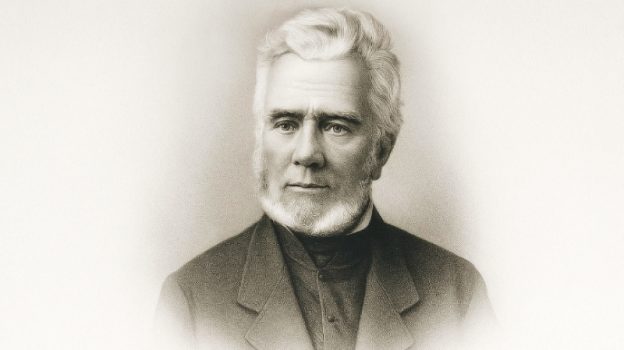
Born in 1792 in Medfield, Massachusetts, Lowell Mason was a banker by trade but a musician by passion. Trained under German émigré Frederick Abel, he immersed himself in the works of Handel, Haydn, and Mozart, developing a love for European sacred music. In the early 19th century, as America sought to define its cultural identity post-Revolution, Mason saw music as a tool for moral and social uplift. Unlike William Billings’ rugged individualism or the Moravians’ insular refinement, Mason’s approach was systematic, aiming to bring music to the masses. “Music elevates the soul and unites communities,” he wrote, reflecting the democratic ideals of a growing nation. His European-inspired vision, while influential, often overshadowed America’s more original musical voices, shaping classical music for decades.
Mason’s hymnody became a cultural force. His 1822 Boston Handel and Haydn Society Collection of Church Music included over 1,600 hymns, blending adaptations of European melodies with original works like “Nearer, My God, to Thee.” These hymns, straightforward and singable, were designed for congregations and schools, contrasting with Billings’ more complex fuging tunes. Mason’s European leanings—favoring polished melodies over American folk traditions—standardized sacred music across churches, fostering a shared musical culture. “Nearer, my God, to Thee, nearer to Thee!” became a beloved anthem, uniting worshippers in song. Today, Mason’s hymns remain prominent in modern hymnals.
But Mason’s most notorious contribution to American hymnody was the tune ANTIOCH as a setting of the hymn “Joy to the World” (Isaac Watts, 1719). Although it is still widely (and misleadingly) attributed to George Frideric Handel, the version well-known today was actually largely composed by Lowell Mason in 1839. Mason likely credited Handel to lend the piece greater credibility and prestige by associating it with a revered European composer—and also boost the sales of his hymnals. While some melodic fragments may loosely resemble passages from Handel’s Messiah (e.g. the first four notes of “Glory to God in the Highest”), there is no direct evidence that Handel ever composed a version of “Joy to the World.” Mason’s decision reflects both his reverence for European musical models and the 19th-century American tendency to legitimize domestic works by linking them to European traditions. This attribution helped the hymn gain traction in American churches, even as it obscured Mason’s own creative role in crafting one of the most enduring Christmas carols for many, many years.
However, Mason’s most significant legacy is music education. In 1833, he co-founded the Boston Academy of Music, training teachers to bring music to public schools. By 1838, he introduced music to Boston’s public schools, a first in America, inspired by the Prussian system’s emphasis on singing. His Manual of the Boston Academy of Music (1834) outlined progressive methods, teaching children to sing by ear before reading notation, making music accessible to all. “Hear the joy of a classroom singing Mason’s melodies,” one teacher recalled, capturing the communal spirit. This model spread nationally, embedding classical music in education and influencing modern programs. Mason’s efforts democratized music, empowering diverse communities to engage with classical forms.
However, Mason’s preference for European models had a lasting impact. By prioritizing polished hymns over traditions that were native to the soil, he sidelined America’s unique musical voice for nearly a century, until composers like Charles Ives revived it. Critics argued his approach diluted American originality, yet it built a foundation for later classical composers like Amy Beach. As president of the Handel and Haydn Society, Mason promoted oratorios, expanding exposure (and influence) of European classical music to American audiences. But further development of an “American voice” would have to wait. ■


Read more by Mark Gresham.




.png)