

January 21, 2026
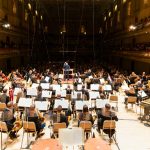
Hodgson Hall, UGA Performing Arts Center
Athens, Georgia – USA
Leif Ove Andsnes, piano.
Robert SCHUMANN: Klavierstücke, Op. 32
György KURTÁG: Selections from Játékok
Leoš JANÁČEK: On the Overgrown Path, Book I
Robert SCHUMANN: Carnaval, Op. 9
Mark Gresham | 27 JAN 2026
Last Wednesday night at Hodgson Concert Hall, pianist Leif Ove Andsnes offered a recital that traced an inward-looking arc across nearly two centuries of piano music, linking Romantic introspection with modernist compression through a carefully balanced program of Schumann, Kurtág, and Janáček.
The evening opened with Robert Schumann’s Klavierstücke, Op. 32, a set of four compact character pieces that set the tone for the recital’s emphasis on musical miniatures. Andsnes shaped the “Scherzo and Gigue” with rhythmic elasticity rather than overt brilliance, allowing the contrapuntal writing to emerge naturally. In the “Romanze,” he favored lyric restraint over overt sentiment, reserving sharper contrasts for the concluding “Fughette,” which closed the set with clarity and lightness rather than weight.
That sense of proportion proved central to the program’s success. Rather than presenting each work as a self-contained showpiece, Andsnes treated the recital as a sequence of related reflections, an approach that made György Kurtág’s Selections from Játékok feel less like a stylistic rupture than a continuation of Schumann’s inward gaze. The brief, aphoristic movements — some lasting less than a minute — were delivered with focused concentration, their silences and fragmentary gestures given as much weight as the notes themselves. Andsnes avoided exaggeration, allowing the music’s spare textures and fleeting references to speak plainly.
Leoš Janáček’s On the Overgrown Path, Book I, formed the emotional center of the program. Andsnes emphasized the cycle’s narrative continuity, shaping the ten short movements as a single unfolding meditation rather than isolated scenes. Folk-inflected rhythms, speech-like phrasing, and sudden harmonic turns were handled with flexibility, while the darker, later movements — especially “Words Fail!” and “The Barn Owl Has Not Flown Away!” — were marked by quiet intensity rather than drama for its own sake.
After intermission, Schumann’s Carnaval, Op. 9, brought outward contrast without breaking the program’s coherence. Andsnes highlighted the work’s quicksilver shifts of character and mood, moving fluently between the mercurial Florestan and the introspective Eusebius, while maintaining forward momentum across its 21 short movements. Even in the more virtuosic episodes, the playing favored articulation and character over sheer volume or speed.
What made the program effective was not its chronological span but its shared aesthetic: music built from small forms, personal gestures, and compressed expression. By framing Kurtág and Janáček between Schumann’s miniatures and his large-scale cycle, Andsnes underscored a throughline of intimacy and psychological nuance that connected Romantic and modern idioms.
The result was a recital that felt thoughtfully constructed rather than merely eclectic, offering listeners a sustained exploration of how composers across eras have used the piano as a vehicle for inward reflection. ■
EXTERNAL LINKS:
- Leif Ove Andsnes: leifoveandsnes.com
- University of Georgia Performing Grts Center: pac.uga.edu

Read more by Mark Gresham.



.png)