
Opera Tampa, one of the area’s cultural gems, celebrates what seemed impossible 30 years ago.
Kurt Loft | 20 APR 2026
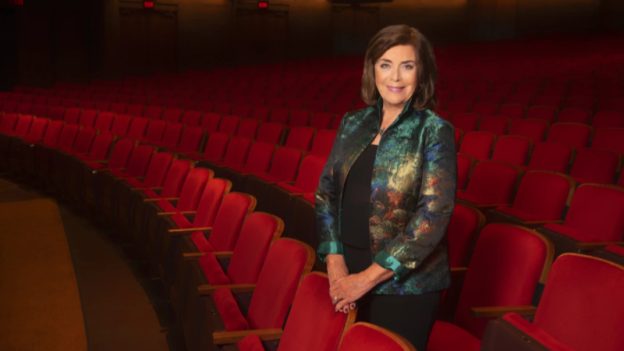
“They say you have to be crazy to start an opera company,” Judy Lisi quipped over lunch. “But we did it.”
Crazy or not, Lisi, planted the seeds for what would become Opera Tampa, which this week wraps up its 30th season with Giuseppe Verdi’s dramatic tragedy, MacbethAs founder of the company and former president of the Tampa Bay Performing Arts Center — now the Straz Center — Lisi’s gamble from the 1990s paid off.
“The center had a big debt in 1992, and I said to the board, ‘if we resolve the deficit, I’d like to think about starting an opera company,” said Lisi, who came to Tampa in 1992 after running the Shubert Performing Arts Center in New Haven, Conn. “Everyone on the board said, ‘if you can solve the deficit problem, you can do anything you want.’”
It took just two years for her team to triage a $6 million shortage and open an opera-size opportunity: a formal plan to support a 400-year-old artform that unites music, drama, poetry, visual arts and storytelling in a way that has never gone out of fashion. Nearly all the top 50 cities in the United States host a professional opera company, which nurtures their cultural identify and local economy.
Opera Tampa embraced the implausible with a signature of more than 100 productions and recitals over three decades. Such success has defied the odds and continues to do so amid cuts in state arts funding. Just as important, it engages people through an expressive, constantly changing platform, said Dr. Christopher Combie, assistant vice president of accreditation at the University of South Florida and a patron of the arts.
“I believe deeply in the power of live performance to connect people and elevate the community,” he said. “Opera embodies form, function and all the rules of good music. Having a company like Opera Tampa signals that we value artistic excellence, creativity, and cultural depth as part of everyday life.”
Bonny Heet and her husband Martin, who relocated from Italy to Florida, wanted to keep opera in their lives and were immediately impressed with Opera Tampa’s offerings, both on and off stage: “When we were new here, they provided us with a sense of community. It’s led to lifelong friendships with amazing people of differing backgrounds and interests.”
Following its inaugural season in 1996, the company presented three grand-scale operas in their original languages, with English translations projected above the stage. Augmenting these productions were recitals featuring internationally acclaimed singers such as Jesse Norman, Kiri Te Kanewa, Andrea Bocelli, Kathleen Battle and Jose Carreras. Opera was gaining momentum here, and major artists wanted to be a part of the excitement.
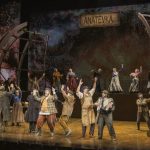
But any excitement needs to include younger people, who traditionally aren’t part of the patronage. So, the company developed a strategy: bring in Broadway musicals with operatic narratives, such as RENT and Miss Saigon>, which are based on two of Puccini’s most successful works, < em>La bohème and Madama Butterfly, respectively. By bridging the gap between popular entertainment and an older art form, the Straz box office lit up.
“We put operas and musicals together as a package in the same season,” Lisi said about the plan. “The hope was to introduce opera to new audiences, and it worked. More and more young people started coming to our performances.”
Of course, opera takes money and shortcuts are noticed. A typical Opera Tampa production can top $500,000, with less than 40 percent covered by ticket sales. That’s why the Straz — with its $55 million operating budget — subsidizes its non-profit resident company by allowing it to function under existing systems, rather than apart from them. Most opera companies have separate administration and marketing departments, but Tampa’s troupe uses what is already in place, so funds go directly to the productions themselves.
Today, this financial flexibility allows Opera Tampa to take risks, be more adventurous, and tackle contemporary issues. The current season, for instance, has been anything but predictable with the world premiere of Love v Death, a macabre double bill by St. Petersburg composer Tom Sivak. Up next was a 2016 opera based on Stephen King’s novel The Shining, followed by a 20th-century classic in Britten’s gothic Turn of the Screw, adapted from the Henry James novel and remade in the 2001 film The Others. To satisfy traditional cravings, the company offered Mozart’s fairytale The Magic Flute and concludes this coming weekend with its first-ever staging of Macbeth — Shakespeare’s play about a ruthless and corrupt quest for power that mirrors modern politics.
Next season tips a hat to convention with Rossini’s Barber of Seville, Verdi’s Falstaff, and Puccini’s Tosca. Repeating such beloved works — along with the new — builds on what is becoming a tradition and source of pride, said Greg Holland, who in 2022 succeeded Lisi as CEO and president of the Straz.
“What’s made Opera Tampa possible over the last 30 years is simple: persistence, belief, and a community that chose to embrace it,” he said. “Today, it’s not just established − it’s essential. The company has helped shape a more complete and confident cultural identity for Tampa Bay and reflects a community that’s willing to invest in great art and see it thrive.” ■
Macbeth: a case study in moral collapse
Opera Tampa closes its season with Verdi’s tragic tale of power and corruption.
Kurt Loft | 20 APR 2026
No literary figure inspired composers more than Shakespeare, and Giuseppe Verdi was hardly tone deaf to the musical possibilities of the famed English bard. In his melodrama Macbeth, Verdi achieves a focus and tragic grandeur seldom equaled in his music. He was so determined in making his tenth opera a smash that he told his librettist, Francesco Piave, to write something bubbling with “extravagance and originality, brevity and sublimity.’
When Macbeth premiered in Florence in 1847, it shook an Italian opera world that had, up to that time, embraced self-inflated singers and lighthearted buffa story lines. With his latest venture, Verdi made technical and artistic demands that paved the way for a more serious style of music drama, infused with intense characterizations and emotional depth. This brand of psychologically penetrating opera led, if indirectly, to the gritty verismo styles of Mascagni, Leoncavallo, and Puccini, who focused not on nobility but the angst of the commoner.
Macbeth is the first major Italian opera to reflect the spirit of Shakespeare and never has “the “gloom of the north been so powerfully evoked by instrumental means,” writes the Verdi scholar Julian Budden. The composer was drawn to the story’s theatrical possibilities, particularly the way the two main characters disintegrate under the weight of their own corrosive power. Verdi expressed this turmoil masterfully in Lady Macbeth’s sleepwalking scene and her husband’s gut-wrenching soliloquies.
Set in a dark Scottish castle and its moors, the opera bathes us in Verdi’s lush, often cryptic score that musically covers a lot of ground: the tale of a military commander whose wife fuels his ambition to be king after murdering the sitting ruler; a spiral of ensuing violence; all-consuming guilt; mental chaos; civil war; power at any cost; and for good measure, another murder. All of this poses a challenge for the principal singers, said Melissa Misener, Opera Tampa’s artistic administrator and resident stage director.
“The role of Lady Macbeth is exceptionally hard,” she said of one of opera’s most vocal acid tests. “It’s an absolute tour de force for the soprano who sings in the style of more than just one kind of singer. In fact, we had to hold auditions to ensure that we could find the right person to play Lady Macbeth before committing to the work.”
The character of Macbeth is also notoriously difficult for any baritone, as it demands a powerful vocal range and the insight of a Shakespearean stage actor. He is at once a battle-hardened warrior, a villain, a coward, and a broken man descending into madness.
Let’s not forget the chorus, which has its own epic assignment in the “Witches’ Chorus” numbers, where a “vulgar yet bizarre” singing replaces the traditional bel canto lyricism of earlier Italian operas. The witches’ demonic prophesies act as a catalyst that drives Macbeth’s downfall and are critical to the operatic mood. Verdi’s innovative choral treatment — with its distinct metrical rhythm — inspired a generation of composers to experiment with new sounds.
“If you ask me, the ‘Witches’ Chorus’ numbers sound more like heavy metal music than anything else in the repertoire,” Misener said. “That’s why this opera rocks.” ■
Opera Tampa performances are Friday, April 24, at 8 p.m. and Sunday, April 26, at 2 p.m. at the Straz Center, 1010 N. MacInnes Place, Tampa. www.strazcenter.org
EXTERNAL LINKS:
- Opera Tampa: strazcenter.org/opera-tampa

Read more by Kurt Loft.

.png)