
April 16 & 18, 2026
Atlanta Symphony Hall
Atlanta, Georgia – USA
Atlanta Symphony Orchestra, Philippe Jordan, conductor; Bertrand Chamayou, piano.
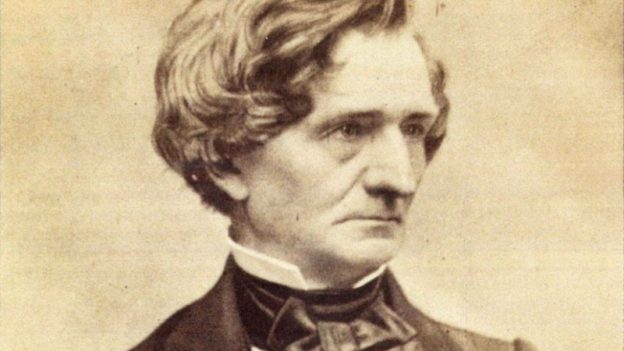
Hector BERLIOZ: Roman Carnival Overture, Op. 9
Camille SAINT-SAËNS: Piano Concerto No. 5 in F major, Op. 103, “Egyptian”
Hector BERLIOZ: Symphonie fantastique, Op. 14
Mark Gresham | 17 APR 2026
Swiss conductor Philippe Jordan made a compelling appearance on Thursday with the Atlanta Symphony Orchestra in a program that leaned fully into the theatrical imagination of early Romanticism. Built around Hector Berlioz’ Symphonie fantastique, the evening traced a line from brilliance and virtuosity to psychological extremity, with pianist Bertrand Chamayou as an eloquent intermediary in Camille Saint-Saëns’ Piano Concerto No. 5.

Philippe Jordan-(credit: Johannes Ifkovits)
Jordan has long shown an affinity for large-scale symphonic thinking and textural clarity. That sensibility served him well here, where Berlioz’ orchestral imagination demands both structural control and a willingness to let the music veer toward the uncanny.
The concert opened with Berlioz’ Roman Carnival Overture, dispatched with rhythmic lift and a finely calibrated sense of contrast. Jordan favored forward momentum over rhetorical exaggeration, allowing the score’s quicksilver shifts between festive exuberance and lyrical repose to emerge organically. Brass and percussion made a strong impression without overwhelming the texture, a balance that would prove crucial later in the program.
Chamayou’s account of Piano Concerto No. 5 in F major (“Egyptian”) was the evening’s most overtly virtuosic offering. His 2018 Erato recording of it paired with the composer’s Piano Concerto No. 2, recorded with the Orchestre National de France under Emmanuel Krivine, won 2019 Gramophone Awards in both the Concerto category and Recording of the Year.

Bertrand Chamayou (credit: Marco Borggreve / Warner Classics)
Widely regarded for his command of French repertoire and a playing style that combines technical polish with coloristic finesse, Chamayou brought both brilliance and poise to Saint-Saëns’ mercurial writing. His articulation remained crystalline even in the concerto’s most elaborate passagework, while the central movement unfolded with an improvisatory ease that suggested the composer’s fascination with exotic sonorities. Jordan proved an attentive collaborator, shaping orchestral textures with transparency and restraint.
Afterward, Chamoyou and Jordan joined forces for a piano four-hands encore, which explains why, during the long staging change between the Roman Carnival Overture and the Piano Concerto, the wrong bench was apparently brought out for Chamoyou, who had to call for a swap before the piece could begin.
After intermission came the main event: Symphonie fantastique, Berlioz’ 1830 landmark that transformed the symphony into a vehicle for narrative and psychological exploration. Its autobiographical program — an artist’s opium-fueled visions of love, obsession, execution, and grotesque afterlife — remains one of the most vivid in the repertory, and its recurring idée fixe binds the five movements into a unified dramatic arc.
Jordan approached the work less as a fever dream than as a well-constructed drama. The opening movement unfolded with notable patience, the conductor allowing phrases to breathe while maintaining a clear architectural line. In “Un bal,” the waltz rhythms retained elegance without losing momentum, and the “Scène aux champs” achieved a rare stillness, its pastoral calm tinged with unease.
It was in the final two movements, however, that Jordan fully embraced the score’s theatrical potential. The “Marche au supplice” carried an inexorable tread, its climaxes well-timed rather than overstated. In the “Songe d’une nuit du sabbat,” the orchestra relished Berlioz’s grotesquerie — the snarling brass, the shrieking winds, the macabre transformations of the idée fixe — without sacrificing clarity. The result was less chaotic spectacle than controlled delirium.
Throughout, the orchestra responded with disciplined energy. Strings articulated Berlioz’ often unforgiving writing with cohesion, while winds and brass brought character without caricature. The performance as a whole underscored why Symphonie fantastique remains a touchstone of the Romantic imagination: not merely for its program, but for the way it expanded symphonic language.
If the evening suggested anything, it is that Jordan’s strengths lie in balancing intellect and immediacy — even if that kept it a somewhat mainstream interpretation, keeping Berlioz’ greater excesses in check while still allowing the music’s strange, visionary power to register. ■
The program will be repeated on Saturday evening, April 18, at Atlanta Symphony Hall.
EXTERNAL LINKS:
- Atlanta Symphony Orchestra: aso.org
- Philippe Jordan: philippejordan.net
- Bertrand Chamayou: bertrandchamayou.com

Read more by Mark Gresham.




.png)