
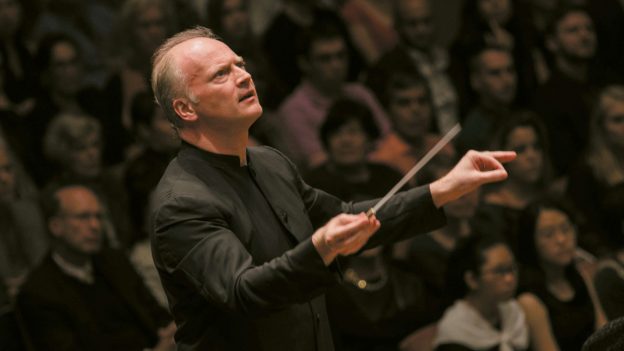
National Symphony Orchestra; Gianandrea Noseda, conductor. Cast: Nicole Heaston (Vanessa), J’Nai Bridges (Erika), Matthew Polenzani (Anatol), Susan Graham (the Old Baroness), Thomas Hampson (the Old Doctor), Jonathan Bryan (Major-Domo), Samuel J. Weiser (Footman); University of Maryland Concert Choir (Jason Max Ferdinand, director).
Samuel BARBER: Vanessa
National Symphony Orchestra NSO0023
Formats: Hybrid SACD, 2-CD
Release Date: May 29, 2026
Total Duration: 117:25
Giorgio Koukl | 21 MAY 2026
“Beauty is the hardest gift to shelter.”
This phrase could be a good introduction to this drama, composed by Samuel Barber, his first opera, apart from the juvenile The Rose Tree, written when he was only 10 and left incomplete after the first act.
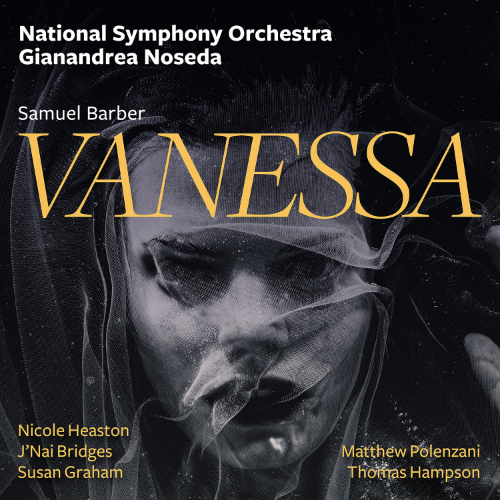
NSO0023 cover art (click to enlarge)
In the years leading up to the composition of Vanessa, the composer and his life companion, Gian Carlo Menotti, searched for a suitable theatrical story that could satisfy Barber’s desire for dense, almost Gothic drama: a concise yet emotionally potent plot that could be effectively realized on stage. Although widely admired as a composer of orchestral and chamber music, Barber had only limited experience in theater and therefore relied heavily on Menotti’s broad theatrical knowledge.
The original 1958 Metropolitan Opera production — fortunately still available on LP — featured a stellar cast including Eleanor Steber (Vanessa), Rosalind Elias (Erika), Nicolai Gedda (Anatol), and Giorgio Tozzi (The Doctor). It remains the benchmark reference recording today.
Now, this new recording of a live concert is released as a National Symphony Orchestra production conducted by Gianandrea Noseda. The singers are all absolute top choices, including Nicole Heaston, J’Nai Bridges, Matthew Polenzani, Susan Graham, Thomas Hampson, Jonathan Bryan, and Samuel Weiser.
The main difference between the Mitropoulos version and the Noseda one is substantial: Barber, somehow not quite satisfied with the dramatic flow, decided to shorten the opera from the original four acts, which included the “Skating Aria” (“Our arms entwined, my hand in his”), to the 1964 version in three acts only. This is now the standard version Noseda used.
Other differences are more subtle: first of all, the recording preference of the fifties was a full “singers first” approach, where every word had to be understood, while Noseda enjoys the high fidelity recording quality and can so at least partly neglect the voices in favor of the exuberant orchestra sound. It has to be said that this choice is sometimes a hint overdone, and indulging in tiny orchestral details sometimes is not in favor of an overall comprehension for the listener. This fact is particularly dangerous for the voice of Vanessa, sung by Nicole Heaston. She has a “buttery” nice voice, but in the more heavily scored parts, she struggles to emerge from the orchestral magma.
The role of the playboy Anatol, perfectly sung by Matthew Pollenzani, has no such problems. He delivers perfect diction and spotless intonation, and he seems really to enjoy the complex characteristics of his character. Even compared to Nicolai Gedda in the Mitropoulos version, he is not of lesser quality.
Finally, the most exposed and difficult personality of Erika, sung by J’Nai Bridges. She is the real soul of this opera, delivers the most convincing interpretation, and fully respects the score’s complexity and psychological depth.
These are top voices which can be specially appreciated in the final quintet, “To leave, to break.” Usually, opera composers venture into such complex scores only after extensive other operatic experience. Not so Samuel Barber. He jumps into this delicate and dangerous region with a sure hand and delivers maybe one of his best scores overall.
The role of the chorus is quite marginal in this opera, so not much space to show their qualities for the University of Maryland Concert Choir. In fact, their role is limited to three appearances, much of it as pure background music, certainly nothing to do with the massive choir scenes of many Italian operas.
Since Samuel Barber’s only other opera, Anthony and Cleopatra, written in 1966, ended unjustly in disaster, probably due to the over-the-top, extravagant excess of Franco Zeffirelli’s costumes, direction, and staging, causing the poor Barber a terrible crisis, Vanessa can be considered the peak of his stage works.
This recording surely deserves a special recommendation, certainly for the magnificent voices, but also for the meticulous capture of the orchestral sound in all its details. ■
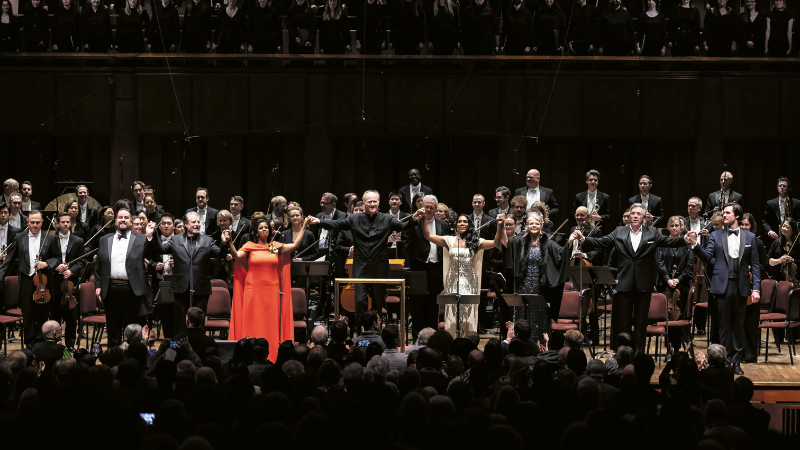
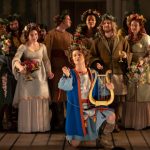
The cast of ‘Vanessa’ takes a bow. (credit: Scott Suchman)
EXTERNAL LINKS:
- National Symphony Orchestra: ationalsymphony.org
- Gianandrea Noseda: gianandreanoseda.com
- Nicole Heaston: nicoleheaston.com
- J’Nai Bridges: jnaibridges.com
- Matthew Polenzani: matthewpolenzani.com
- Susan Graham: susangraham.com
- Thomas Hampson: thomashampson.com
- Jonathan Bryan: jonathanbryanbaritone.com
- Samuel Weiser: samuelweiserbass.com
- University of Maryland Concert Choir: music.umd.edu

Read more by Giorgio Koukl.
.png)