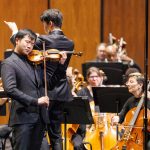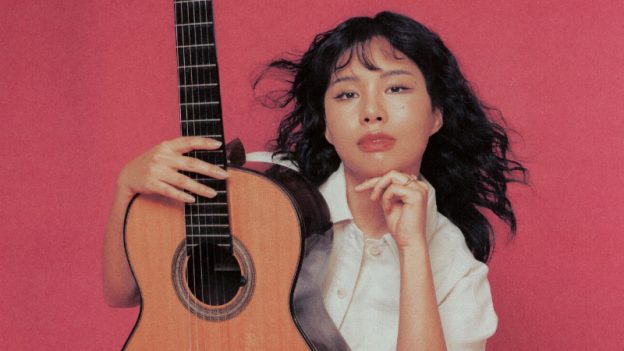
Guitarist JIJI makes Houston debut in Steven Mackey’s ‘Aluminum Flowers’
October 16, 2026
Jones Hall
Houston, Texas – USA
Houston Symphony, David Robertson, conductor; JIJI, guitar.
Igor STRAVINSKY: Symphonies of Wind Instruments (1920, revised 1947)
Steven MACKEY: Aluminum Flowers (2023)
Wolfgang Amadeus MOZART: Symphony No. 41 in C major, K. 551 (“Jupiter”) (1788)
Lawrence Wheeler | 20 OCT 2026
Friday evening, distinguished guest conductor David Robertson led the Houston Symphony in a program featuring works by Igor Stravinsky, Steven Mackey, and Wolfgang Amadeus Mozart. Making her Houston debut was South Korean guitarist JIJI, also known professionally as Jiji Guitar. This was high school night, with dedicated music teachers shepherding their students to Jones Hall for an eclectic musical experience. Even with these added forces, the hall was only half full.
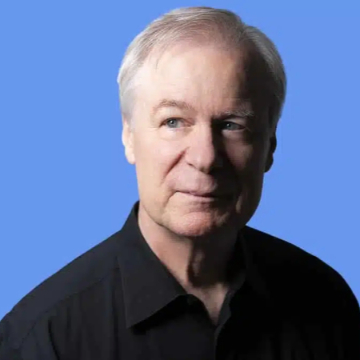
David Robertson (credit: Chris Lee, 2025)
The program began with Stravinsky’s Symphonies of Wind Instruments, composed in 1920 and revised in 1947 with minor instrumental changes. Stravinsky dedicated the piece to his close friend Claude Debussy, who died in 1918. Stravinsky was deeply influenced by Debussy, as seen in direct parallels between Prélude à l’après-midi d’un faune and The Rite of Spring. Symphonies does not reflect Debussy’s musical style. Rather, it stands at the end of Stravinsky’s use of Russian-styled folk themes and at the threshold of his emerging neoclassical period. Symphonies—meaning sounds together—is not based on symphonic form. Three thematic subjects follow one another, separate and self-contained, with the form based solely on repetition rather than continuity. The concluding chorale, written first, is more reverential than emotional. The piece as a whole is more ascetic than aesthetic. A masterpiece, it is meant to be observed rather than felt.
When Robertson came out, he shook the principal flutist’s hand, bowed, and told the audience, “Don’t worry, the strings are waiting backstage.” This broke the ice and signaled that he was not a fearsome maestro but a musical friend. Later, when applause came between movements, he said he loved applause—especially for “people dressed like penguins.” With many young and less experienced people in attendance, his inclusive demeanor opened the door to return visits.
The Houston Symphony winds acquitted themselves admirably, exhibiting the tonal warmth and impeccable intonation shown in recent performances. Many highlights included beautifully presented flute solos by Kayla Burggraf, second-clarinet lines played by Christian Schubert, ultra-high bassoon solos by Rian Craypo, and rock-solid French horns. The brass section contributed crisp articulations and carefully blended lyrical passages. Robertson led the mixed-meter score with clarity and ease.
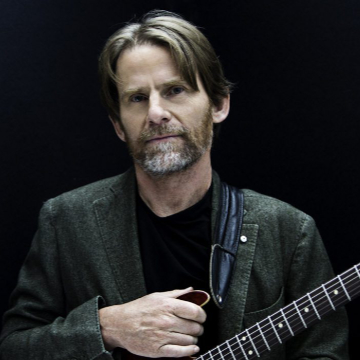
Steven Mackey. (credit: Kah Poon, 2017)
Steven Mackey began his musical career playing electric guitar and still performs his own solo electric guitar music. He is an admirer of Mozart and Stravinsky, potentially making his placement between them an excellent programming idea. Mackey has said Stravinsky is about juxtapositions and Mozart about transitions. We heard juxtapositions in Symphonies of Wind Instruments. Mozart’s Symphony No. 41 would showcase transitions.
Aluminum Flowers was written for JIJI. It has five movements, each presenting acoustic and electric guitar in different guises. “Introduction” features a Gymnopedie-style, off-kilter waltz for acoustic guitar. “Echo” uses an electric guitar delay pedal to produce an echo effect. It is propelled by kinetic energy. “Canción” uses distortion to create a sustained tone. Midway through, the guitar starts a riff that is passed through the orchestra before turning darker and fading away. “Fantasia” features a prepared guitar, with a pick inserted behind the strings and a bottleneck that slides across them. Percussion provides a Javanese gamelan-inspired rhythm. The movement alternates between acoustic and electric guitar. In a theatrical turn, a percussionist twirls a pair of whirligigs above his head. In the final movement, “Loop,” the guitar lays down a repeating pattern that continues through the concerto’s most virtuosic passages. The movement concludes with string and harp glissandos that move up and down the strings, creating an effect that is more visual than acoustic.
Mackey is a highly regarded composer, with innumerable accolades and performances of his works. Unfortunately, I found nothing memorable about this piece beyond its musical gestures and novel effects. JIJI played the piece as well as it could be played, and Robertson stayed the course with enthusiasm. The Houston Symphony performed admirably. Between the glissandos and the whirligigs, it is a testament to the musicians’ professionalism that they kept a straight face.
Mozart’s 41st Symphony is his last and longest symphony and is one of the greatest symphonies ever written. Its four movements are gems of musical beauty within a framework of structural clarity.
Robertson illuminated the score with elegance and consummate stylistic understanding. The symphony musicians responded with beautifully executed playing. The balance in the first movement was enhanced by placing the timpani on the floor and blending the trumpets discreetly into the orchestral texture. Muted upper strings in the second movement highlighted Mozart’s skillful woodwind writing while providing an achingly restrained tone color. Nicely shaped phrases in the Menuetto lent elegance to this courtly dance. The Finale consists of five themes, culminating in a grand fugue that is a miracle of invention. Robertson’s steady hand propelled the movement without allowing the tempo to accelerate. The balance was a model of transparency, and the playing was a model of virtuosity. ■
The program was repeated Saturday evening and Sunday afternoon.
EXTERNAL LINKS:
- Houston Symphony: houstonsymphony.org
- David Robertson: conductordavidrobertson.com
- JIJI: jijiguitar.com
- Steven Mackey: stevenmackey.com

Read more by Lawrence Wheeler.
RECENT POSTS
 Raven Chacon’s “Voiceless Mass” anchors an immersive evening with ensemble vim and Bent Frequency • 19 Oct 2026
 New Jersey Symphony names Gaetan Le Divelec vice president of artistic planning and operations • 17 Oct 2026