
October 1, 3 & 4, 2026
Atlanta Symphony Hall
Atlanta, Georgia – USA
Atlanta Symphony Orchestra, Nathalie Stutzmann, music director and conductor; Johan Dalene, violin.
George Frideric HANDEL: Overture to Music for the Royal Fireworks (1749)
Johannes BRAHMS: Violin Concerto in D major, Op. 77 (1878)
Johannes BRAHMS: Symphony No. 1 in C minor, Op. 68 (1876)
Atlanta Symphony Orchestra
October 8 & 10, 2026
Atlanta Symphony Hall
Atlanta, Georgia – USA
Atlanta Symphony Orchestra, Nathalie Stutzmann, music director and conductor.
Richard WAGNER: Prelude to Act I of Lohengrin (1850)
Johannes BRAHMS: Symphony No. 3 in F major, Op. 90 (1883)
Richard WAGNER: Prelude and Liebestod from Tristan und Isolde (1865)
Richard WAGNER: Overture to Rienzi (1842)
Paul Hyde | 13 OCT 2026
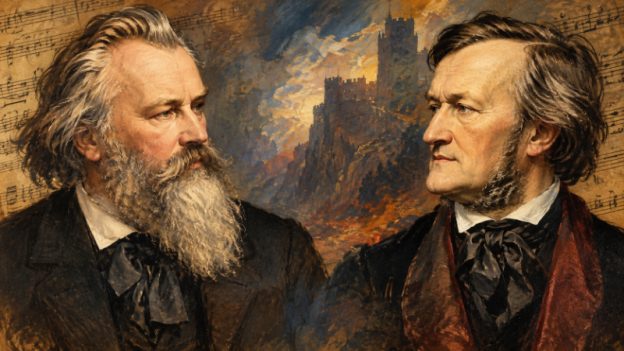
In the 19th century, Brahms and Wagner divided the musical world into rival camps. Brahms’ admirers defended tradition. Wagner’s hailed a revolution.
But two season-opening Atlanta Symphony Orchestra concerts, led by music director Nathalie Stutzmann, offered a happier verdict: These supposed musical adversaries make excellent companions.
Indeed, the two composers’ contrasting approaches to romantic expression served to illuminate each other.
Across programs presented Oct. 3 and Oct. 8, the orchestra under Stutzmann’s nimble direction moved confidently between Brahms’ carefully constructed symphonic architecture and Wagner’s sweeping theatrical gestures.
The Oct. 3 concert spotlighted Brahms’ Violin Concerto, featuring the young Swedish-Norwegian violinist Johan Dalene. Dalene offered an expressive, finely detailed interpretation, balancing technical command with a persuasive sense of musical conversation. Stutzmann and the orchestra proved able partners, supporting the soloist while preserving the concerto’s dramatic sweep. The enthusiastic audience seemed to desire a Dalene encore, which was not offered.
The orchestra then turned to Brahms’ Symphony No. 1, which Stutzmann led in a vigorous, big-statement performance. Thunderous timpani strokes at the opening announced the work’s epic ambitions. Brahms labored for years over the symphony, acutely aware of the monumental shadow cast by Beethoven, and Stutzmann made its weight and determination unmistakable.
But the performance was not without delicacy. The second movement offered warmth and intimacy, while the third brought welcome grace and charm. Stutzmann understood that Brahms’ grandeur depends as much on contrast and restraint as on sheer volume.
The fourth movement brought one of the evening’s most memorable moments. Its famous horn solo, beautifully played by Ryan Little, seemed to this listener like the sun bursting through clouds after a storm. The following well-known lyrical theme, the one bearing a resemblance to Beethoven’s “Ode to Joy,” was delivered with understated nobility. The finale gathered momentum toward the grand, brassy conclusion, capping a performance that balanced symphonic heft with lyrical beauty.
The Oct. 8 concert opened with Wagner’s Prelude to Lohengrin. The strings shimmered with extraordinary delicacy, creating an atmosphere of almost otherworldly stillness amid the bustle of downtown Atlanta outside Symphony Hall. Wagner’s music can overwhelm through sheer force, but Stutzmann revealed its capacity for quiet enchantment, allowing the sound to unfold with luminous clarity.
Brahms’ Symphony No. 3 followed in a performance distinguished by expression, balance and precision. Stutzmann brought particular sensitivity to the graceful third movement. Her treatment of a phrase’s pickup included a subtle hesitation before emphasizing its highest note. It was a small interpretive choice, but a revealing one: a familiar musical gem suddenly seemed to catch the light from a different angle.
The program returned to Wagner with the Prelude and Liebestod from Tristan und Isolde. The strings sounded lush and burnished as the music gathered momentum, its harmonies perpetually reaching toward a resolution just beyond their grasp. Stutzmann shaped the long arc with a sure sense of direction, building toward the transcendent climax of the Liebestod. Wagner’s romantic longing seemed to reach beyond ordinary experience, and the orchestra gave it a richly compelling voice.
Stutzmann concluded with Wagner’s Overture to Rienzi, a robust, go-for-broke account that brought the concert to an emphatic finish. Where the Tristan excerpts explored the inward intensity of desire, the overture reveled in theatrical energy and bold gestures. It was a rousing demonstration of Wagner’s ability to command an audience’s attention.
Taken together, the concerts made a convincing case for hearing Brahms and Wagner not as rival camps but as complementary voices in 19th-century music. Brahms offered structural rigor, warmth and symphonic breadth. Wagner supplied atmospheric color, psychological intensity and theatrical sweep. Under Stutzmann’s assured leadership, both composers emerged in performances that respected their distinctive characters while revealing their shared romantic sensibilities.
The old musical feud may have made for lively arguments among 19th-century listeners. These concerts suggested that the rest of us can enjoy the best of both worlds. ■
EXTERNAL LINKS:
- Atlanta Symphony Orchestra: aso.org
- Johan Dalene: johandalene.com

Read more by Paul Hyde.

.png)