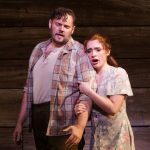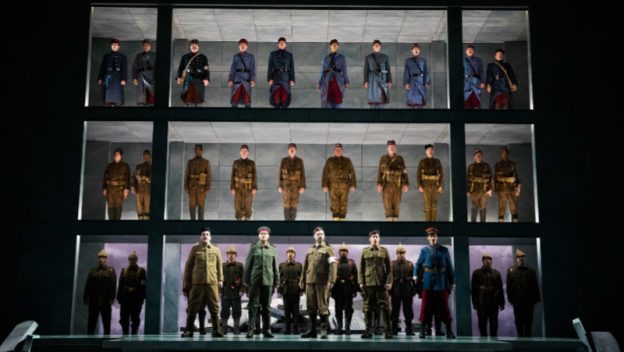
‘Silent Night’ and ‘All Is Calm’ each bring to the stage the extraordinary story of soldiers who laid down their arms on Christmas Eve 1914
Mark Gresham | 3 NOV 2026
The Atlanta Opera brings Kevin Puts and Mark Campbell’s Silent Night together with Peter Rothstein’s All Is Calm, two very different theatrical encounters with a moment when soldiers on opposing sides recognized one another’s humanity.
Silent Night opens this Saturday, Nov. 7, with four performances scheduled through Nov. 15 (Nov. 7, 10, 13 and 15) at the Cobb Energy Performing Arts Centre. All Is Calm: The Christmas Truce of 1914 follows with 19 performances Dec. 2–27 at Theatrical Outfit’s intimate Balzer Theater at Herren’s.
On Christmas Eve 1914, along stretches of the Western Front, something happened that seemed almost impossible in the midst of World War I. Soldiers who had spent months trying to kill one another began singing across the trenches. In some places, men cautiously climbed out of their dugouts and met in No Man’s Land. They exchanged greetings, shared food and drink, showed photographs of their families, and, in certain sectors, played football.
For a brief time, the machinery of war stopped turning. The men facing one another were no longer simply British, French or German soldiers. They were sons, husbands and fathers, separated from the people they loved and uncertain whether they would ever see them again.
The truce did not end the war. It did, however, leave behind an extraordinary record of what could happen when men taught to regard one another as enemies recognized something familiar on the other side of the battlefield.
More than a century later, The Atlanta Opera is telling that story twice, through two works that could hardly be more different in their theatrical approaches. Kevin Puts and Mark Campbell’s Pulitzer Prize-winning opera Silent Night brings the conflict to the stage on a grand operatic scale. Peter Rothstein’s All Is Calm: The Christmas Truce of 1914 takes a more intimate route, assembling soldiers’ words and songs into a documentary portrait of the same event.
The pairing is not simply an opportunity to revisit a remarkable episode of history. It raises a more interesting question: What can two different forms of musical theater reveal about the same human experience?
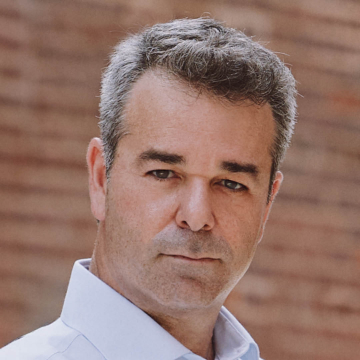
Tomer Zvulun (courtesy of The Atlanta Opera)
For The Atlanta Opera’s General and Artistic Director Tomer Zvulun, the answer lies partly in the contrast itself. One work surrounds the audience with the scale and violence of war; the other brings the audience close to the individuals who lived through it.
“All Is Calm is the perfect foil and companion to Silent Night,” Zvulun said. “The two works tell essentially the same story, but they approach it through completely different theatrical languages.”
He describes Silent Night as a vast mural of epic action, an IMAX war film presented on a grand operatic scale. Its orchestra numbers approximately 60 musicians, with some 60 performers occupying a monumental visual world. All Is Calm, by contrast, features ten singers without an orchestra. Its material comes from documented letters, songs, and recollections of the soldiers themselves.
“If Silent Night allows us to see the entire battlefield, All Is Calm brings us face-to-face with the individual soldier,” Zvulun said. “One work gives us scale; the other gives us proximity.”
That distinction is the organizing idea behind the pairing. The works do not compete to tell the story better. They offer different ways of seeing it.
The operatic canvas
Silent Night, which premiered in 2011, is based on the film Joyeux Noël, written and directed by Christian Carion. Puts and Campbell shaped the story into an opera that moves among French, German and British soldiers, following the events that lead to the Christmas truce and the brief suspension of hostilities.
Zvulun first encountered the work while preparing its European premiere at the Wexford Festival Opera in 2014. Its theatrical possibilities were immediately apparent to him.
“I found it extraordinarily theatrical and powerful,” he said. “It was the most cinematic opera I had ever directed, not only in its storytelling, but also in its musical language.”
He hears in Puts’ score echoes of composers ranging from Britten, Stravinsky, Puccini, Mozart and Strauss to film composers John Williams and Hans Zimmer. From the beginning, Zvulun said, the intention was to create an experience with the scale and enveloping effect of an IMAX film, while retaining the expressive resources of opera.
The production earned critical acclaim at Wexford, where it won two Irish Times Theatre Awards: Best Opera Production and the Audience Choice Award. It subsequently traveled to The Atlanta Opera (2016), Washington National Opera (2018), Glimmerglass Festival (2018), Austin Opera (2019), Utah Opera in Salt Lake City (2020), and Florida Grand Opera in Miami and Fort Lauderdale (2025).
For this season’s Atlanta revival, Zvulun returns to a work he has directed in multiple cities and theatrical environments. He sees its central idea as increasingly important: how people can divide into opposing camps until they lose the ability to recognize the humanity of those on the other side.
Yet the opera’s power does not rest solely on its large-scale depiction of war. Its emotional center is the gradual discovery that the men in the opposing trenches have much in common.
“The opera’s great theatrical idea is that music crosses no-man’s-land before the soldiers do,” Zvulun said. “A human voice reaches the other side, another voice responds, and the identities imposed upon these men begin to fall away.”
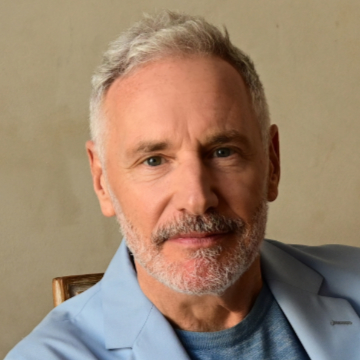
Mark Campbell (credit: Shervin Lainez)
That idea is also embedded in Mark Campbell’s libretto.
Campbell explained that the libretto normally precedes the music in opera, with the librettist making many initial decisions about structure, theme, and character before the composer sets a note. Writing the first act of Silent Night, based on Carion’s screenplay, took him about a week. The second act proved more difficult until he returned to a sentence he had placed above his desk:
“The story shows us that war is not sustainable if you know the other side is human.”
He said that thought guided the scenes as he worked through the second act. The challenge was to make the opera’s large historical events personal without losing the story’s sweep.
The score’s five languages also serve a dramatic purpose. Campbell chose them to intensify the divisions among the three armies. As the soldiers begin to come together, those linguistic barriers gradually break down.
“The cinematic sweep in many ways mirrors the screenplay,” Campbell said. “However, the challenge there was balancing the more monumental moments with those that are intimate and personal. A movie can do that with a close-up; an opera may require the text and music of an aria.”
The distinction between the monumental and the personal matters in a story where the historical event is extraordinary precisely because it becomes an encounter among individuals.
Inside the battlefield
This year’s Atlanta production adds yet another dimension to that contrast through an unusual visual approach. For this revival, Zvulun is introducing handheld and body-mounted cameras to bring the audience closer to the soldiers’ immediate experience.
The idea draws on cinéma vérité and the subjective visual language of films such as Saving Private Ryan. Rather than relying exclusively on the stage’s broad visual perspective, the cameras create imagery from within the battlefield, placing the audience nearer to the physical details of combat and the soldiers’ encounters with one another.
“The stage gives us the epic scale of war; the camera gives us its terrifying intimacy,” Zvulun said.
The Atlanta Opera Film Studio and Felipe Barral are developing the visual approach in collaboration. Zvulun said the team has created a cinematic vocabulary in which live performance and filmmaking collide in real time.
“With the tenth revival of our iconic production of Silent Night, I wanted to ask how we could once again break the boundaries of opera and challenge what audiences expect to experience in the theater,” he said.
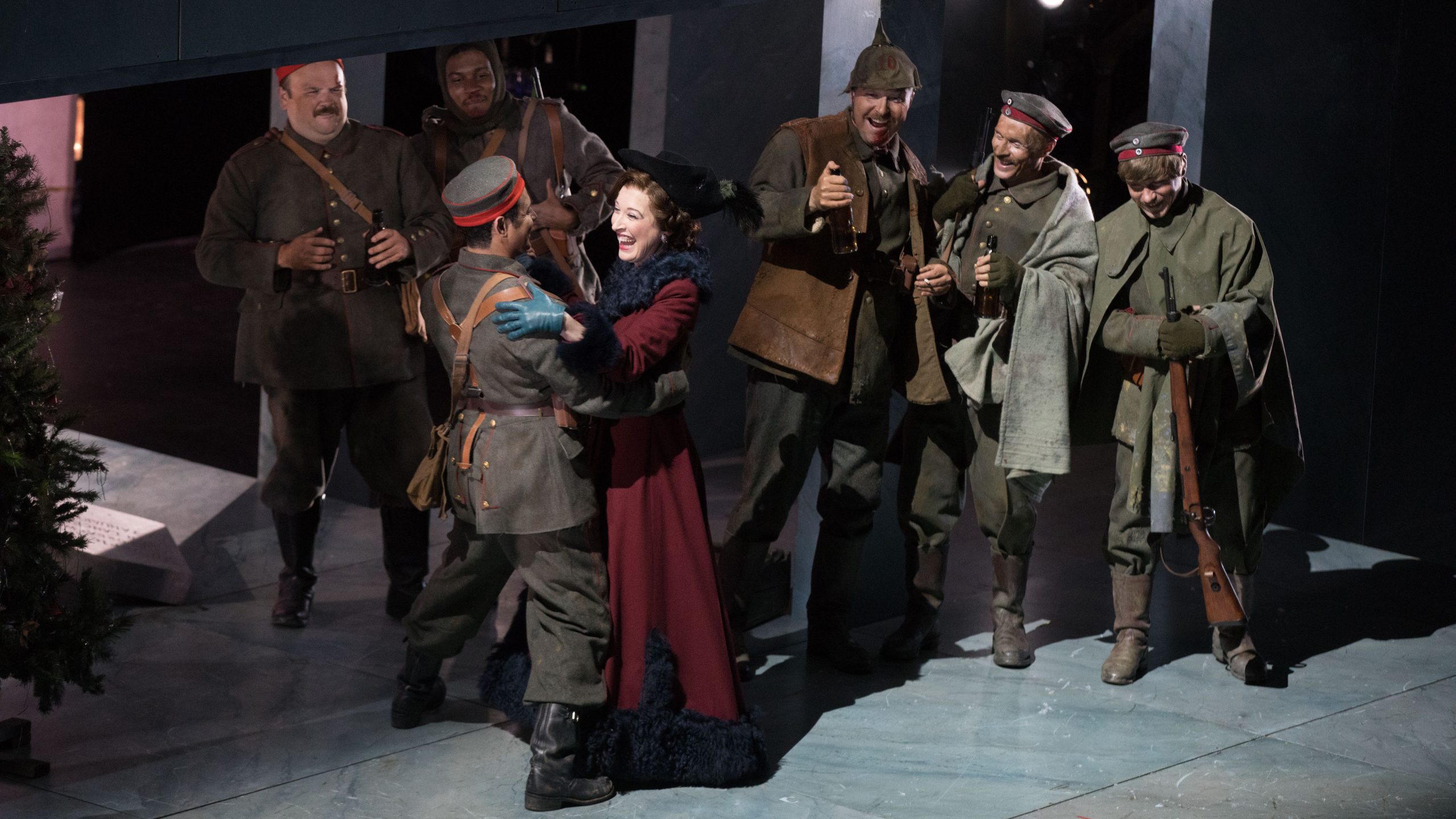
Ava Pine, center, as opera singer Anna Sørensen greets the German soldiers in The Atlanta Opera’s 2016 production of ‘Silent Night.’ (credit: Jeff Roffman)
The cameras are an innovation, but their purpose is not simply to make the production look more like a film. They offer a way to reconcile two perspectives: the scale of a battlefield and the vulnerability of the individuals caught inside it. A large stage can show the machinery of war; a close image can reveal what that machinery does to a human being.
That tension also anticipates the contrast with All Is Calm, where the audience encounters the soldiers not through cameras but through their own words and songs.
The voices of the soldiers
At the Balzer Theater, All Is Calm: The Christmas Truce of 1914 approaches the same history from a different direction. Originally developed as a radio play that debuted on Minnesota Public Radio in 2007, the work later moved to local stages and a national tour before its Off-Broadway staging at the Sheen Center in New York in November 2018; it received the 2019 Drama Desk Award for Unique Theatrical Experience. Its text draws on soldiers’ letters, diaries, and other documentary material, with songs and recollections giving voice to the men who experienced the truce.
Rather than following a single group of characters through a conventional dramatic plot, the work presents the event through multiple perspectives: British and German soldiers, officers, and historical figures. The result is a collective portrait assembled from individual testimony.
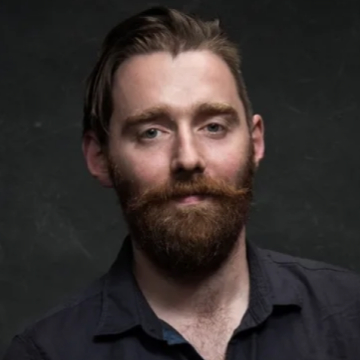
Matt Torney (courtesy of The Atlanta Opera)
Matt Torney, who directs the production, sees that documentary foundation as central to the relationship between performers and audience.
“The documentary element creates a very different connection to the story, especially when there is a musical element as well,” he said. “Instead of a single story where you follow characters through the full journey of the Christmas Truce of 1914, you experience the whole event from a multitude of perspectives.”
The words themselves make a difference. These are not simply lines written to suggest what soldiers might have thought or said. They are drawn from the historical record.
“The audience gets to see this incredible event through all of their eyes, and the fact that the words are real creates a very different relationship to the story,” Torney said.
The director’s challenge is to make each voice distinct. Some of the men are represented by only a small amount of text, requiring the performers to suggest an entire individual through a few carefully delivered words.
“When you only have 75 words to capture a full person, it needs a higher level of precision,” Torney said.
Dialect is another essential element. The soldiers came from different parts of England, Germany, and France, and the production uses an expert dialect coach to help establish the differences among their voices.
The Balzer Theater’s intimacy is part of the approach. With the performers only a few feet from the audience, the work does not depend on the distance and scale of a large opera house. Its dramatic force comes from the immediacy of the people speaking and singing.
“The intimate scale of the Balzer brings the audience inside the story, right to its heart,” Torney said. “It also creates a very different relationship to the performers, who are just a few feet away.”
The contrast with Silent Night is clear. One production places the audience amid a large operatic depiction of war; the other puts the audience close to the men whose words document it. One builds its world through orchestral and visual scale; the other through the accumulation of voices.
Neither approach diminishes the other. They illuminate different aspects of the same event.
The journey home
Zvulun has compared the two works not only to Saving Private Ryan but also to The Odyssey.
At first glance, the connection between an ancient epic and a twentieth-century battlefield may seem unlikely. But the comparison rests on a simple desire that crosses centuries and cultures.
“When we think about The Odyssey, we do not necessarily begin by asking which army Odysseus belonged to,” Zvulun said. “We remember that he wanted to return home to his wife, Penelope, and his son, Telemachus.”
Beneath the mythology, politics and warfare, he said, is the desire to see the people one loves again.
“Soldiers throughout history have shared that desire,” he said. “They want to return to their families, but they live with the knowledge that they may never reach them. The men on the other side of the battlefield are living with precisely the same fear and longing.”
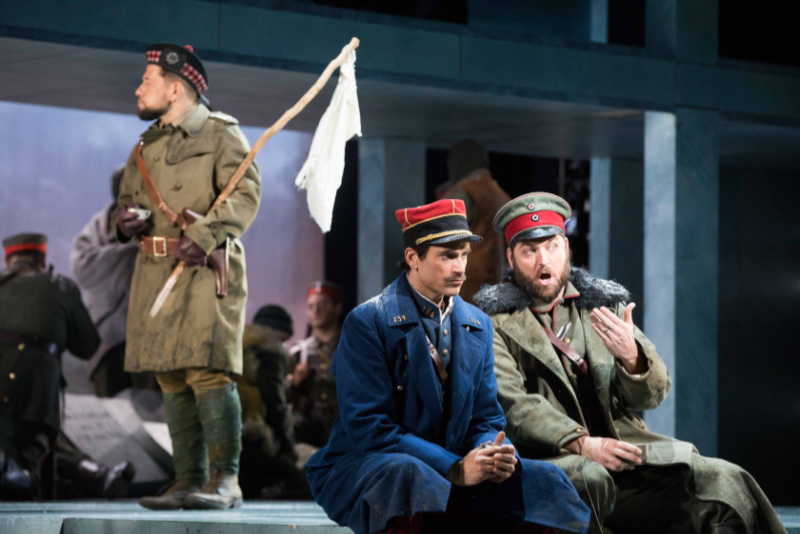
Matthew Worth, left, as French Lt. Audebert, and Craig Irvin as German Lt. Horstmayer share a conversation during the truce in The Atlanta Opera’s 2016 production of ‘Silent Night.’ (credit: Jeff Roffman)
This perspective changes how we understand the Christmas truce. The men did not suddenly stop belonging to their respective armies, nor did their differences disappear. But for a short time, the uniforms and national allegiances became less important than the people wearing them.
That recognition is at the heart of both works. The historical truce becomes more than an unusual interruption in a war. It is a moment when the men on either side of No Man’s Land saw one another as individuals with lives and attachments much like their own.
Beyond the stage
The Atlanta Opera’s relationship with veterans provides another connection between the subject of these productions and the company’s work beyond the theater.
According to Zvulun, the veterans initiative began taking shape in 2015 with the company’s presentation of David T. Little’s Soldier Songs at the Rialto Center for the Arts. That production included collaborations with veterans’ organizations, including the Atlanta Vietnam Veterans Business Association, and helped build a deeper relationship with the area’s veterans community.
Support from The Home Depot Foundation later enabled a program that allowed veterans to attend Atlanta Opera productions free of charge. The program formally began in 2016. Since then, Zvulun said, approximately 70,000 veterans have been offered access to performances.
For Zvulun, the relationship is not simply about providing complimentary tickets. Veterans bring an understanding of military experience that audiences without that background may not possess. Their presence also underscores that war is not merely a historical setting or a theatrical device, but an experience with consequences for individuals, families and communities.
That perspective is particularly relevant to two productions concerned with soldiers who, for a brief time, saw beyond the uniforms and national identities that separated them.
One story, two encounters
The Christmas truce of 1914 lasted only briefly. The war resumed, and the soldiers returned to the trenches. What endured was the record of a moment when men ordered to regard one another as enemies recognized a common humanity.
Silent Night and All Is Calm approach that moment from different directions. Puts and Campbell’s opera uses the scale of grand opera, a multilingual score and a cinematic visual world to portray the conflict and its interruption. Rothstein’s All Is Calm turns to the documentary record, allowing the soldiers’ own words and songs to assemble the story from the ground up.
The Atlanta Opera’s decision to present both places two theatrical languages in conversation: one expansive, the other intimate; one built around the machinery and scale of war, the other around the voices of those who endured it.
The difference is not merely one of size or musical form. It is a difference in perspective. One asks the audience to see the battlefield; the other asks them to listen to the men standing in it.
And both return to the same recognition: the people across No Man’s Land are not so different from the people waiting at home. ■
EXTERNAL LINKS:
- The Atlanta Opera: atlantaopera.org
- Theatrical Outfit: theatricaloutfit.org
- Tomer Zvulun, director of Silent Night: tomerzvulun.com
- Mark Campbell, librettist of Silent Night: markcampbellwords.com
- Matt Torney, director of All Is Calm: matttorney.com
- Peter Rothstein, creator and writer of All Is Calm: peter-rothstein.com

Read more by Mark Gresham.