
The real problem is treating a federal board as illegitimate
Mark Gresham | 2 SEP 2026
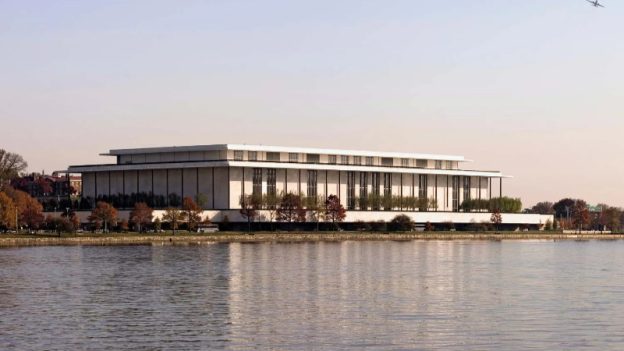
On August 29, The Atlantic published a short culture piece by Janay Kingsberry titled “The Kennedy Center Has a Problem That Courts Can’t Fix.” Its argument is straightforward: a board of “Trump loyalists” keeps making new decisions—renaming plans, shutting down for renovation—that send the John F. Kennedy Center for the Performing Arts back into court, and neither a judge nor Congress can easily stop the cycle.
The Atlantic’s account rests on a substantial body of documented facts. The question is what those facts mean.
President Trump replaced dozens of trustees after taking office and appointed himself as a general trustee; the board elected him chair. In December 2025, the center’s board voted to put his name on the building. The board voted March 16, 2026, to begin winding down programming and close the center in July for approximately two years for renovations.
Rep. Joyce Beatty (D-Ohio), an ex-officio trustee by virtue of her congressional position, sued.
U.S. District Judge Christopher Cooper ruled that the renaming exceeded the board’s authority under the statute that created the center as a living memorial to John F. Kennedy. He also found the closure decision inconsistent with the trustees’ fiduciary duty of prudence, describing the vote as “ill-informed and seemingly preordained.”
The board later voted again to close the main campus and to put Trump’s name back on the exterior in a different form: “Restored and Renovated by President Donald Trump,” plus related plaza and endowment language. The statute says no additional memorials or plaques “in the nature of memorials” shall be installed in public areas. The fight continues.
That is the dispute. The Atlantic’s framing is the problem.
How the article is written
Kingsberry describes the litigation as “Wagnerian,” the situation as “grim and unresolved,” and the board as the party that “keeps making decisions that drag out the ordeal.” Trustees are “Trump’s allies”—“billionaires, White House aides, Fox News personalities, and other figures associated with Trump world.” A judge can restrain them but cannot remake the board. Congress can remake it, but Trump can veto. Therefore, the board itself is the unfixable problem.
The loaded nouns do the work. Presidential appointees of either party are usually political allies. The piece does not describe prior Democratic-era trustees in the same register. Judge Cooper’s critical phrases are quoted as if they settle the institutional question.
The board’s stated reasons—structural need, a large congressional appropriation for repairs, fundraising tied to the president’s involvement—receive comparatively little attention.
Ticket and donation declines after the name change, documented elsewhere, are presented as evidence of the consequences of Trump’s takeover, but the financial record is more complicated. Ticket sales had already declined after the board overhaul, while the center attributes its problems to earlier financial mismanagement and argues that the renovation plan could improve its finances. The available evidence establishes a sharp decline; it does not by itself settle how much of that decline is attributable to the name change, the broader politicization of the institution, programming decisions, or other factors.
This is advocacy with a dateline. It treats one party’s lawful use of appointment power as a legitimacy crisis and a single Democratic plaintiff’s lawsuit as the institution’s conscience.
What the statute and the building actually are
The Kennedy Center’s statutory board consists of 36 general trustees appointed by the president and 23 ex officio members who serve by virtue of their government or congressional positions. That appointment structure predates Trump. The president’s authority to appoint the general trustees is established by statute, with trustees serving staggered six-year terms. If that appointment power produces boards that cultural elites dislike, the remedy is legislation, not a standing assumption that those appointees are “loyalists” whose votes are inherently suspect.
The original attempt to insert Trump into the official title was blocked. The later language is different: credit for restoration and renovation, a plaza name, a possible endowment line. Whether that is “in the nature of a memorial” is a legal question. Public buildings routinely acknowledge restorers and major donors. Assuming the statute forbids any visible recognition of the sitting president is an interpretation, not a fact the article is entitled to treat as obvious.
On closure: a large, aging complex that Congress funded at a scale far above the center’s usual appropriation can reasonably be shut for concentrated work instead of years of partial disruption.
The dispute is therefore not over whether the building needs work. It is over whether a complete two-year closure is the appropriate way to undertake it, given the center’s statutory mission to operate a performing-arts institution and memorial, and whether the board adequately considered alternatives before voting to close. A judge can demand a better record. He cannot simply substitute his judgment for the board’s on how a deteriorating facility should be repaired.
Revenue shortfalls after the institution became a political symbol cut both ways. They may show mismanagement. They may also show that a large share of artists, donors, and ticket buyers will punish any association with Trump.
Beatty’s suit is a legal action brought by a Democratic member of Congress who serves on the board by virtue of her office. It also reflects the political conflict surrounding the center: she is challenging actions taken by a board whose presidentially appointed majority was installed by an opposing administration.
The legal claims can be evaluated on their merits, but presenting the dispute as political only when describing the board’s actions creates a conspicuous asymmetry in the article’s framing.
The actual institutional problem
Courts can issue injunctions. They cannot appoint trustees or rewrite the 1960s statute. Congress can change the governance structure; it has not. Calling that deadlock “a problem courts can’t fix” is true in a narrow sense and misleading in a larger one. The deadlock exists because both parties now treat a performing-arts memorial as a prize. One side uses its control of the appointed board to assert its authority over the institution. The other uses litigation to challenge that authority.
A standalone cultural institution would depoliticize its operations, publish the engineering and financial case for renovation publicly, and stop using lettering as a loyalty test. The Atlantic piece does not ask for that. It asks readers to see the appointed board as the obstacle and judicial supervision plus Democratic trustees as the fix. That is not analysis of a federal memorial. It is a preference about who should control it. ■

Read more by Mark Gresham.





.png)