

October 18, 2023
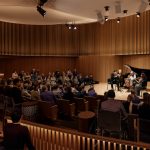
Morgan Hall, Bailey Performance Center, Kennesaw State University
Kennesaw, GA – USA
Robert Henry, piano
Frédéric CHOPIN: Ballade No. 1 in G Minor, Op. 23
Frédéric CHOPIN: Ballade No. 2 in F Major, Op. 38
Frédéric CHOPIN: Ballade No. 3 in A♭ Major, Op. 47
Frédéric CHOPIN: Ballade No. 4 in F Minor, Op. 52
Frédéric CHOPIN: Scherzo No. 1 in B minor, Op. 20
Frédéric CHOPIN: Scherzo No. 2 in B♭ minor, Op. 31
Frédéric CHOPIN: Scherzo No. 3 in C♯ minor, Op. 39
Frédéric CHOPIN: Scherzo No. 4 in E major, Op. 54
Mark Gresham | 20 OCT 2023
Kennesaw State University’s Bailey School of Music has been hosting a Music, Nature & Sustainability Festival this week with the premise of “music inspired by the natural world and the desire to sustain it for future generations.”
Wednesday night’s installment at Morgan Hall was a solo recital by pianist Robert Henry, coordinator of piano studies at the school. The program featured Frédéric Chopin’s four Ballades and four Scherzos. It was difficult to size up how the repertoire fit into the “nature and sustainability” theme. But that’s okay: We came for the music, not the proposed extra-musical context.
Created between 1833 and 1842, Frédéric Chopin’s four Ballades and four Scherzos are exceptional compositions for solo piano that marked a significant shift in his musical style, demonstrating the composer’s ability to infuse both structural innovation and profound emotions into his music, with his style becoming more ornamental and harmonically sophisticated. They remain today among the pillars of solo piano repertoire.
But let’s be clear: Although they were programmed and performed here as “Four Ballades” and “Four Scherzos” (and are published that way), each of them is an individual standalone work with its own opus number, not composed as sets, and written years apart. And yet performing them as such entirely makes sense.
The Ballades opened the concert, comprising the entire first half. Mr. Henry seemed surprised at the onset of applause after the first Ballade, as if expecting to play all four before an ovation would occur. That would have been desirable from a performer’s point of view. But audiences do what they do, and there seems to be a recent increase in audience applause even between movements of a symphony or a concerto, so the bright side of that is perhaps an increase in new audience members.
After a brief intermission, Mr. Henry played the Scherzos, which gave the impression of being even more technically challenging than the Ballades. In particular, the Scherzo No. 2 in B♭ minor, Op. 31, is the most difficult of the four. The left-hand part requires a charge of muscle mass that simply must be there; otherwise, the pianist risks cheating notes, thus a lack of precision. But Mr. Henry handled that challenge well.
The tone of the evening was not that of a prim or pristine performance, nor should it have been. As evidenced in past recitals and chamber concerts, Mr. Henry has the undeniable ability to do that with attention to clarity and carefully balanced voices within the piano part, particularly in more classical and late baroque repertoire. But here, with Chopin, he instead dug more into the music’s sheer emotional depth, allowing for some musically necessary risks and, at the same time, not overreaching into the kind of gestural histrionics to which so many pianists seem to succumb when playing showpieces. That is much to his credit as a performer.
Mr. Henry closed the performance with a more subtle and reflective encore, the Etude in A♭ major from Trois nouvelles études (1839). ■
EXTERNAL LINKS:
- Robert Henry (page at Parker Artists): parkerartists.com/Robert-Henry.html
- KSU Bailey School of Music: kennesaw.edu/arts/academics/music

Read more by Mark Gresham.




.png)