
September 27 & 28, 2025
Jones Hall
Houston, Texas – USA
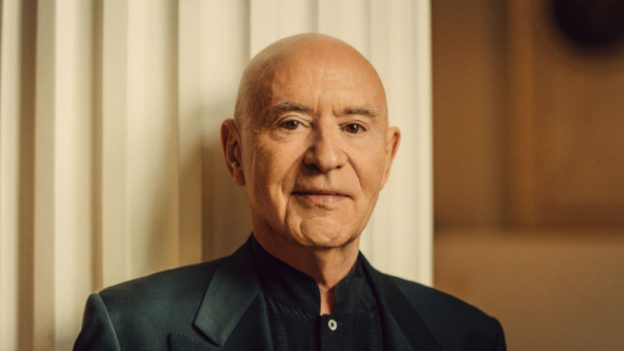
Houston Symphony, Christoph Eschenbach, conductor; Jasmine Choi, flute: Allegra Lilly, harp.
W. A. MOZART: Concerto in C major for Flute, Harp, and Orchestra, K. 299
Anton BRUCKNER: Symphony No. 7 in E-major (1881-1885)
Lawrence Wheeler | 30 SEP 2025
On Saturday evening, former Houston Symphony music director Christoph Eschenbach returned to Jones Hall to lead a program of Mozart’s Concerto for Flute and Harp and Anton Bruckner’s Symphony No. 7. Eschenbach, who turned 85 in February, has recently had to alter programs and even cancel appearances due to declining health. Assisted onto the stage by two men, he was welcomed with warm applause—many audience members rising to their feet. Once on the podium, he conducted seated, score before him.
Mozart’s double concerto is the composer’s sole work for harp. Though neither the flute nor harp were among his favorite instruments, commissions yielded not only this concerto but also two flute concerti, four quartets, and several smaller works. The orchestration is light—strings with pairs of oboes and two horns—and often features pizzicato strings that are plucked like a harp.
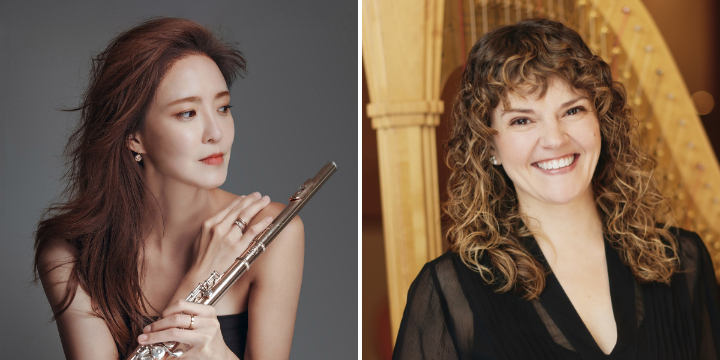
L-R: flutist Jasmine Choi, harpist Allergra Lilly.
Making her solo debut, Houston Symphony principal harpist Allegra Lilly offered playing of luminous tone, rhythmic clarity, and technical assurance. Flutist Jasmine Choi, a last-minute substitute, quickly won over the audience with her golden timbre and expressive playing. Together, the music sparkled, their ensemble so natural it seemed they had been playing together for years. As an encore, they delivered Jacques Ibert’s Entr’acte with buoyant charm.
Eschenbach led the orchestra with the smallest of gestures—his baton rarely more than inches from the stand. This understated approach suited Mozart’s chamber-like textures, which the players rendered with refinement and sensitivity.
The second half offered Bruckner’s monumental Seventh Symphony, part of Eschenbach’s yearlong traversal of the composer’s works in honor of Bruckner’s bicentennial. Few pairings are as familiar as Eschenbach, the Houston Symphony, and Bruckner: the chemistry between conductor and musicians remains unmistakable. Veterans of his tenure trust his instincts implicitly; younger players, too, fall easily into his expansive, organic flow.
Bruckner’s 7th is like an opera without words, with varied motifs and harmonies portraying different characters and emotions. Despite visible frailty, Eschenbach was able to convey a cohesive interpretation with the subtlest flick of the wrist or tilt of the head. Tempos may have been one click slower, but the musical intent was clear. A handful of rough entrances and a briefly misaligned chromatic line did not diminish the overall sweep. The performance was, in the best sense, transporting.
The orchestra responded with playing of remarkable polish. Guest concertmaster David Chan led a first violin section that shimmered with expressive confidence. The cellos sang their themes warmly, often entwined with violas or horns. Basses and tuba grounded the ensemble with resonant depth, while the woodwinds, led by Aralee Dorough’s eloquent flute solos, were consistently excellent. Brass brought both grandeur and brilliance: William VerMeulen’s French horn and Robert Johnson’s Wagner tuba stood out, while the entire section powered Bruckner’s climaxes with thrilling force. Percussion was almost ceremonial—Brian Del Signore saving a single cymbal crash for the Adagio’s shattering peak.
The concert was repeated Sunday afternoon, but for those present on Saturday, the evening carried the weight of something rare: a beloved maestro, visibly frail yet still able to summon musical transcendence. ■
EXTERNAL LINKS:
- Houston Symphony: houstonsymphony.org
- Christoph Eschenbach: christopheschenbach.com
- Jasmine Choi: jasminechoi.com
- Allegra Lilly: music.rice.edu/faculty/allegra-lilly

Read more by Lawrence Wheeler.

.png)