
January 17, 2026
Spivey Hall
Morrow, Georgia – USA
Angel Blue, soprano; Bryan Wagorn, piano.
Gabriel FAURÉ: “Claire de lune”
Gabriel FAURÉ: “Mandoline”
Gabriel FAURÉ: “Fleur jetée”
Claude DEBUSSY: Claire de lune
Sergei RACHMANINOFF: “Ne poy, krasavitsa, pro men”
Sergei RACHMANINOFF: “Zdes’ khorosho”
Sergei RACHMANINOFF: “Vesennyev ode”
Richard STRAUSS: “Heimliche Aufforderung,” Op. 27, No. 3
Richard STRAUSS: “Allerseelen,” Op. 10, No. 8
Richard STRAUSS: “Morgen!,” Op. 27, No. 4
Richard STRAUSS: “Befreit,” Op. 39, No. 4
Richard STRAUSS: “Cäcilie,” Op. 27, No. 2
George GERSHWIN: Prelude No. 2 (“Andante con moto”) from Three Preludes
Lee HOIBY: “Lady of the Harbor”
Lee HOIBY: “Winter Song”
Lee HOIBY: “There Came a Wind Like a Bugle”
Harold ARLEN: “I Wonder What Became of Me”
George GERSHWIN: “Our Love Is Here to Stay”
Kurt WEILL: “Youkali”
TRADITIONAL (arr. Stephen Hough): “In His Hands”
TRADITIONAL: “Deep River”
TRADITIONAL: “Ride On King Jesus”
Mark gresham | 21 JAN 2026
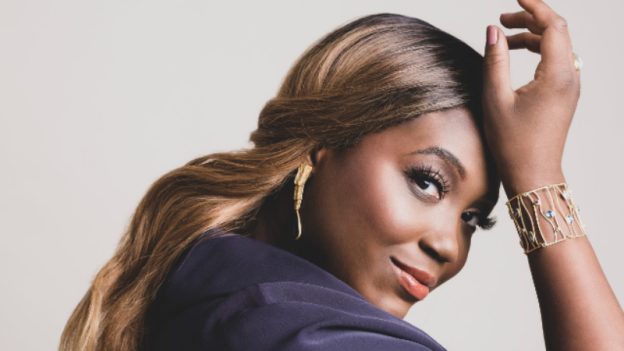
Soprano Angel Blue presented a thoughtfully constructed solo recital January 17 at Spivey Hall, where she was accompanied by the sensitive Canadian pianist Bryan Wagorn.
A two-time Grammy Award winner, Blue has received the 2020 Beverly Sills Award and the 2022 Richard Tucker Award. She is renowned for her portrayals of major Verdi, Puccini, and Gershwin roles: from Aida and Tosca to Mimì in La bohème and Bess in Porgy and Bess. She excels at infusing characters with vocal richness and deep emotion. Her advocacy for inclusivity in the arts further distinguishes her both on and off the stage.
The evening’s program revealed a broad stylistic sweep. It moved chronologically and geographically from late-19th-century French mélodies through Russian romances and German lieder to mid-20th-century American song and arranged spirituals. This structure allowed Blue to showcase her vocal versatility—its honeyed resonance in lyrical passages, soaring power in climactic moments, and nuanced coloristic shading. The program maintained a cohesive emotional arc, focusing on longing, nature, love, and spiritual reflection.
The recital opened with three songs by Gabriel Fauré: the luminous “Claire de lune,” the playful “Mandoline,” and the ardent “Fleur jetée.” Blue’s phrasing displayed elegant restraint and subtle dynamic control, supported by Wagorn, who then followed with a solo piano number, Debussy’s own atmospheric Claire de lune. These impressionistic French works established a delicate, introspective tone.
The mood shifted to the ardent Russian idiom with three Rachmaninoff songs. Blue performed the melancholic “Ne poy, krasavitsa, pri mne” (“Never sing to me again”), the serene “Zdes’ khorosho” (“How fair this place”), and the surging “Vesenniye vody” (“Spring Waters”). Her plush middle register and expressive portamento brought warmth to these selections.
A substantial Richard Strauss group followed, featuring five songs: the passionate “Heimliche Aufforderung,” the tender “Allerseelen,” the radiant “Morgen!,” the valedictory “Befriet” (“Freed”), and the exuberant “Cäcilie.” Here, Blue’s voice opened fully, demonstrating the operatic scale and gleaming high notes that have earned her acclaim.
The second half ventured into American repertoire, with some changes from the printed order. It began with another solo by Wagorn: the middle “Blues” prelude (“Andante con moto”) from George Gershwin’s Three Preludes.
Blue then returned to the stage to sing an evocative trio of songs by Lee Hoiby, “Lady of the Harbor,” “Winter Song,” and “There Came a Wind Like a Bugle.” These were succeeded by Harold Arlen’s wistful “I Wonder What Became of Me,” George Gershwin’s tender “Our Love Is Here to Stay,” and Kurt Weill’s exotic “Youkali.”
The program concluded with three traditional spirituals arranged by Stephen Hough: “In His Hands,” “Deep River,” and “Ride On, King Jesus,” which allowed Blue to draw on spiritual depth and vitality that reflect her advocacy work and personal heritage. Her interpretations combined dignity and fervor for a powerful and uplifting close.
Throughout the evening, Wagorn proved an ideal partner. His playing was characterized by clarity, color, and unobtrusive support that let Blue’s voice shine. The intimate acoustics of Spivey Hall’s 400-seat hall enhanced the performers’ direct communication with the audience.
Instead of an encore, Angel Blue asked for singers in the audience to raise their hands and called one of them, a young woman at the front, up to the stage—an unscripted gesture that reflected her desire to uplift students, as she once was herself. Word is that it was entirely spontaneous; she was not pre-selected and had no idea she would be chosen to join Angel onstage to sing. We are told that Blue had noticed how intensely this woman, identified only as an Artist Diploma student at Columbus State University, was watching her and suspected she was a serious vocal student.
In sum: Angel Blue’s recital was a compelling portrait of an artist at ease in both song and opera, delivering a program notable for its shape, stylistic variety, and emotional authenticity. ■
EXTERNAL LINKS:
- Angel Blue: angeljoyblue.com
- Bryan Wagorn: askonasholt.com/artist/bryan-wagorn
- Spivey Hall: spiveyhall.org

Read more by Mark Gresham.

.png)