
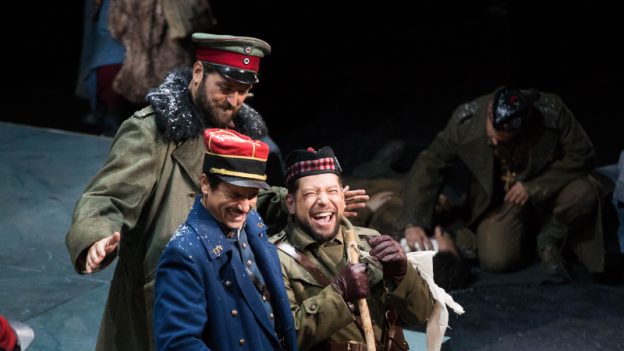
Tomer Zvulun discusses a season that bridges grand opera, contemporary premieres, and off-Broadway work, all united by themes of conflict, love, and redemption.
Mark Gresham | 2 MAR 2026
As The Atlanta Opera prepares for one of the most consequential transitions in its history, the company this morning unveiled its 2026–27 season. Groundbreaking has already taken place for the Molly Blank Center for Opera and the Arts, a permanent home set to open in early 2028, and the coming season represents the final full artistic statement before that move reshapes how opera is created and experienced in Atlanta.
In recent years, the company has steadily expanded its scope beyond the traditional mainstage model, presenting productions in alternative venues, collaborating with theater companies, producing films and documentaries, and embracing contemporary works alongside the core repertory. The upcoming season brings those threads into sharp focus, juxtaposing Wagner’s The Flying Dutchman, Bizet’s Carmen, and Puccini’s Tosca with Kevin Puts’ Pulitzer Prize-winning Silent Night, Tazewell Thompson’s Jubilee, the off-Broadway a cappella work All Is Calm, and a world premiere in the NOW Festival. Themes of war, reconciliation, and redemption run across the programming, reflecting both historical subject matter and broader artistic intent.
For general and artistic director Tomer Zvulun, the season serves not only as a bridge between venues but as a declaration of identity—an affirmation of the company’s long-stated goal of “breaking the boundaries of opera.” In the following conversation with EarRelevant’s publisher, Mark Gresham, Zvulun reflects on the thematic vision behind the season, the evolving relationship between opera and other art forms, and how the Molly Blank Center will enable a more expansive future.
The interview below has been edited for length and clarity.
Mark Gresham: This season falls between the groundbreaking of the Molly Blank Center and its planned opening at the beginning of 2028. How does the artistic vision for this season reflect that transitional moment, and what thematic connections tie these operas together as the company moves toward this new chapter?
Tomer Zvulun: I’m happy to. This is the final season before we move into a new home, designed to further the mission of The Atlanta Opera: breaking the boundaries of opera. That vision has guided us in expanding what opera can be.
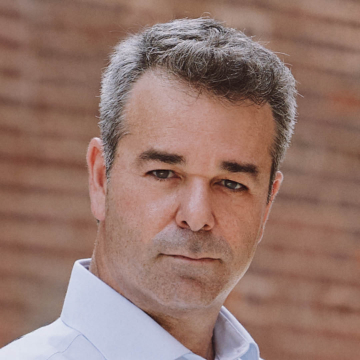
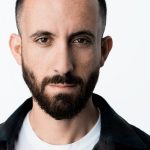
Tomer Zvulun (courtesy of The Atlanta Opera)
It’s no accident that the pieces programmed span genres and styles while pairing epic war stories, psychological dramas, and spiritual journeys. All confront conflict head-on—whether literal war, internal struggle, the Civil War in Jubilee, the Napoleonic Wars in Tosca, World War I in both All Is Calm and Silent Night, or the wartime backdrop of Carmen. Yet all of them resolve through the idea of redemption through love, a Wagnerian concept we all know.
That love takes many forms. It can be romantic love, but also the bond between comrades, friends, or partners. Across the seven productions—four mainstage productions, two Discovery Series presentations, and a world premiere in the NOW Festival—there is a true multi-genre spectrum.
There are grand operas, from Wagner to Bizet to Puccini, alongside modern classics such as Silent Night. There is a musical theater/off-Broadway production, All Is Calm, in partnership with Theatrical Outfit. There are African-American spirituals in Tazewell Thompson’s Jubilee. And there is a brand-new world premiere, Rosenbaum and Li (Rose, Tree), by composer Dina Pruzhansky and librettist Hai-Ting Chinn.
This season is an epitome of what “breaking the boundaries of opera” means for the company, and it serves as a bridge to having our own venue, which will allow us to continue presenting genre-defining work in the proper facility.
MG: As the company approaches the opening of the Molly Blank Center, how do you see this season shaping audience excitement and preparing them for what’s ahead?
TZ: The strategy of the season is very much connected to the new venue. We envision the future opera company as an arts organization presenting multiple kinds of work in different genres, scales, and media.
That includes grand opera at the highest level, with the greatest singers in the world, alongside musical theater, chamber works, African American spirituals at Morehouse, and newly written world premieres. Film is also part of this ecosystem. All our productions are broadcast, and we create documentaries. We recently produced two documentaries based on Fiddler on the Roof and The Shining, and this season exemplifies that genre-bending approach.
You move from Puccini to Kevin Puts to Dina Pruzhansky to Tazewell Thompson to musical theater at Theatrical Outfit. It’s never just one thing. It’s all thematically connected, because thematic cohesion is very important to us.
For example, the fall season surrounds Veterans Day, which I feel strongly about. One of the central works is Silent Night, which I consider the greatest opera written in the 21st century, paired with the same story told in a different genre: the a cappella off-Broadway musical All Is Calm. That kind of thematic dialogue is essential to our identity, along with breaking boundaries between genres and disciplines.
MG: I see that All Is Calm runs throughout the entire month of December. That’s an unusually long run for an American opera company, though common in musical theater.
TZ: It’s similar to last year’s Fiddler on the Roof, which ran for a month and a half and had 45 sold-out performances, or Rent and La bohème the year before, which had 16 performances. We are exploring scalability in the number of performances, especially when we’re not limited to the mainstage model.
MG: The Molly Blank Center will include two smaller venues. How will those spaces influence this kind of development and the company’s evolving approach to opera?
TZ: The future of The Atlanta Opera is based on dialogue between art forms—film, musical theater, grand opera, and chamber opera—and between the classic and the contemporary, between newly written works and pieces written 300 years ago.
This new building will allow that dialogue to flourish. Programming Silent Night on the mainstage while presenting All Is Calm in a smaller theater, in a different genre, reflects that future.
It’s about connectivity and clarity—communicating to audiences that stories are stories, and opera is a magnificent art form capable of containing all of them. We will continue presenting grand opera—four productions every year, as audiences expect—but we will also help audiences see how those operas connect to other forms.
Just as many people don’t realize that La bohème inspired the musical Rent, or that Saving Private Ryan and John Williams influenced Kevin Puts’ Silent Night, those connections deepen understanding. That is a fascinating aspect of the company, and the new venues will allow us to explore it fully.
MG: To conclude, what message would you like to share with readers and audiences about this season and what it represents?
TZ: My message is that in recent years, Atlanta has shown that opera can live comfortably on a grand stage, in a black box theater, in a circus tent, in an abandoned warehouse, or on a streaming platform.
The 2026–27 season goes even further in breaking the boundaries of opera by bringing together grand classics, a modern Pulitzer Prize-winning masterpiece, an off-Broadway a cappella work, and the great tradition of American spirituals.
All of these stories and genres share the theme of war and conflict, with the possibility of redemption through love hovering above them.
As the last season before moving into our new home—a space designed to embody this vision by placing different works and genres side by side—we wanted to offer Atlanta a clear statement of what opera can be.
Across Silent Night, Carmen, The Flying Dutchman, Tosca, All Is Calm, Jubilee, and Rosenbaum and Li, these works tell one sweeping story about how human beings confront violence, oppression, and conflict—and how love, faith, and community can ultimately redeem those wounds. Now more than ever, we need that message. ■
THE ATLANTA OPERA: 2026-27 SEASON
All performances take place in the Cobb Energy Performing Arts Centre unless otherwise specified
- Nov 7, 10, 13, 15, 2026
Kevin PUTS: Silent Night
Mark Campbell, librettist
Nikolaus Sprink: Kameron Lopreore
Anna Sørensen: Sylvia d’Eramo
Lt. Audebert: Luke Sutliff
Lt. Horstmayer: Aleksey Bogdonov
Iván López Reynoso, conductor
Tomer Zvulun, director - Dec 2026 (21 performances)
Theatrical Outfit’s Balzer Theater
Discoveries Series
Peter ROTHSTEIN: All is Calm: The Christmas Truce of 1914
Matt Torney, director
Co-produced with Theatrical Outfit - Jan 30; Feb 2, 5, 7, 2027
Georges BIZET: Carmen
Henri Meilhac and Ludovic Halévy, librettists
Carmen: Rihab Chaieb
Don José: Joshua Guerrero
Escamillo: Łukasz Goliński
Micaëla: Andrea Carroll
Brenna Corner, director
Conductor TBD - Mar 13, 16, 19, 21, 2027
Richard WAGNER: The Flying Dutchman
Dutchman: Ryan Speedo Green
Senta: Wendy Bryn Harmer
Daland: Andrew Potter
Iván López Reynoso, conductor
Tomer Zvulun, director - May 1, 4, 7, 9, 2027
Giacomo PUCCINI: Tosca
Luigi Illica & Giuseppe Giacosa, librettists
Tosca: Monica Conesa
Cavaradossi: Jorge Puerta
Scarpia: Ernesto Petti
Iván López Reynoso, conductor
Tomer Zvulun, director - June 2027 (dates TBA)
NOW Festival
Ray Charles Performing Arts Center, Morehouse College
Tazewell THOMPSON: Jubilee
Tazewell Thompson, director
Dianne Adams McDowell, vocal arrangements and music direction
Dina PRUZHANSKY: Rosenbaum and Li (Rose, Tree)
Hai-Ting Chinn, librettist
PHOTOS:
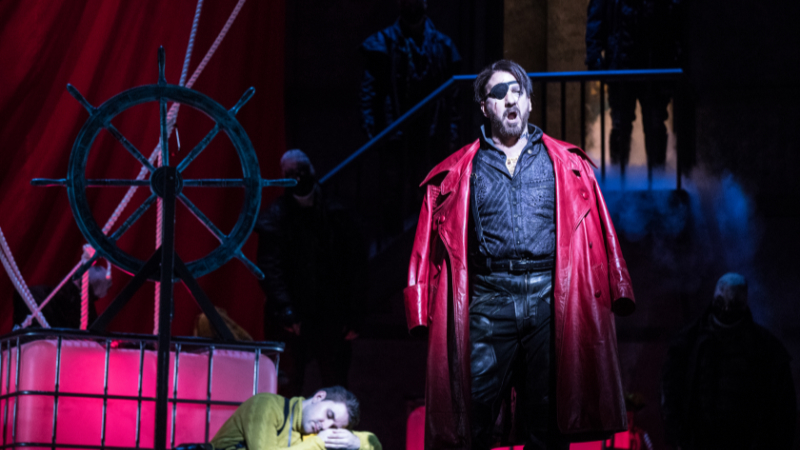
Wayne Tigges sings the role of the ghostly Dutchman in a 2017 production of Wagner’s ‘The Flying Dutchman’ at The Atlanta Opera. (credit: Jeff Roffman)
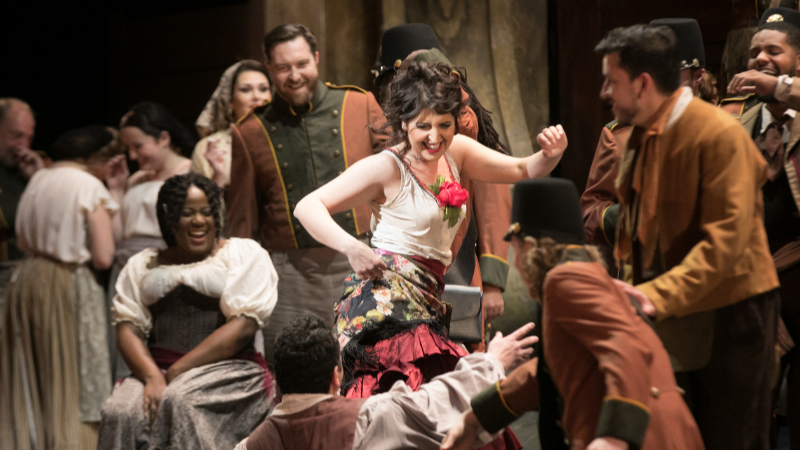
Varduhi Abrahamyan, center, as Carmen dances in a 2018 production Bizet’s ‘Carmen’ at The Atlanta Opera. (credit: Jeff Roffman)
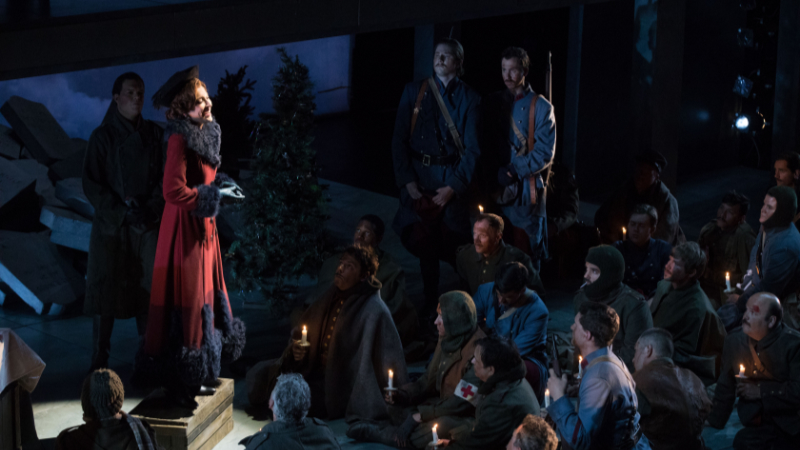
Ava Pine as opera singer Anna Sorenson entertaining the troops in a 2016 production of Kevin Puts’ ‘Silent Night’ at The Atlanta Opera. (credit: Jeff Roffman)
EXTERNAL LINKS:
- The Atlanta Opera: hatlantaopera.org
- Tomer Zculun: tomerzvulun.com

Read more by Mark Gresham.

.png)