
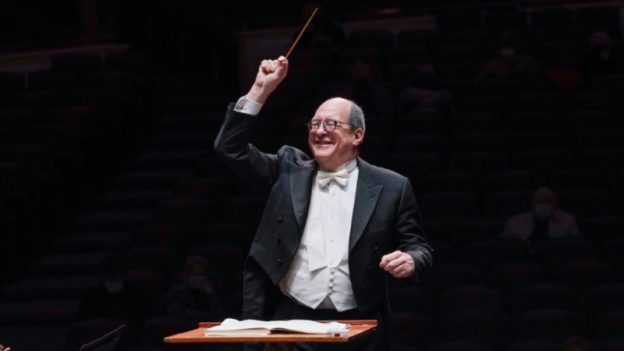
Spano, Shi, and Tao illuminate the music’s literary and psychological kinship
May 7 & 9, 2026
Atlanta Symphony Hall, Woodruff Arts Center
Atlanta, GA – USA
Atlanta Symphony Orchestra, Robert Spano, conductor; Zhenwei Shi, viola; Conrad Tao, piano.
Hector BERLIOZ: Harold in Italy, Op. 16, H. 68
Leonard BERNSTEIN: Symphony No. 2, “The Age f Anxiety”
Mark Gresham | 13 MAY 2026
Returning to the Atlanta Symphony Orchestra podium for a second week in a row, music director laureate Robert Spano led the orchestra in a program that paired two works rooted in literary inspiration and psychological wandering: Hector Berlioz’ Harold in Italy and Leonard Bernstein’s Symphony No. 2, “The Age of Anxiety.” Featuring violist Zhenwei Shi and pianist Conrad Tao as soloists, Thursday’s concert traced a broad emotional arc from Romantic introspection to mid-20th-century urban unease.
Berlioz’ Harold in Italy occupies an unusual middle ground between a concerto and a sinfonia concertante, while Bernstein’s The Age of Anxiety similarly blurs the distinction between symphony and concerto. That ambiguity is one of the strongest conceptual links between the two works. Under Spano’s direction, the performances emphasized the kinship: both are symphonic journeys shaped less by traditional narrative than by states of mind.
The pairing also highlighted Spano’s longstanding affinity for music with literary and theatrical undercurrents. A conductor closely associated with contemporary American repertoire and psychologically nuanced interpretation, Spano approached both scores with an emphasis on color, pacing, and atmosphere rather than overtly demonstrative rhetoric.
Berlioz’s Harold in Italy, inspired by Lord Byron’s Childe Harold’s Pilgrimage, occupied the first half of the concert. Written after violin virtuoso Niccolò Paganini requested a concerto for viola, the piece ultimately evolved into something more elusive: a hybrid of symphony and tone poem in which the solo viola serves as an observer rather than a dominating protagonist.
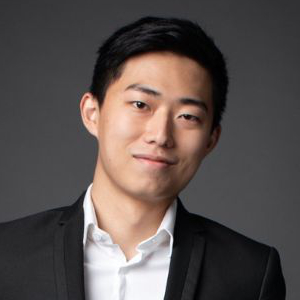
Zhenwei Shi (Pittsburgh Symphony)
Zhenwei Shi, who was appointed the newly designated principal violist of the Pittsburgh Symphony Orchestra at the beginning of this season, is listed in the program book’s orchestra roster as “on leave” as principal violist of the Atlanta Symphony Orchestra, a post to which Spano appointed him at the age of twenty-three, for the 2019–20 season. This kind of one-year “probationary” transitional period is normal practice among professional orchestras.
Shi embraced his solo role with a warm, centered tone and long lyrical lines, allowing the viola to emerge organically from Berlioz’s orchestral textures. In the opening movement, his phrasing suggested a reflective, solitary presence moving through changing landscapes rather than confronting the orchestra directly.
Spano drew transparent textures from the orchestra throughout the score, clarifying Berlioz’s intricate orchestration without sacrificing momentum. The “March of the Pilgrims” unfolded with measured restraint, while the serenade movement brought deft woodwind playing and light-footed rhythmic character. In the finale, “Orgy of the Brigands,” Spano balanced theatrical energy with structural clarity, preventing the music’s exuberance from becoming chaotic.
The second half turned from the Romantic traveler of Byron and Berlioz to the existential uncertainty of W.H. Auden and Bernstein. Bernstein’s Symphony No. 2, “The Age of Anxiety,” composed in 1949 and revised in 1965, takes its title and general conception from Auden’s Pulitzer Prize-winning poem, which follows the discussions of four strangers meeting in a New York bar during World War II and continuing at one of their apartments through a night of drinking, searching conversations, and uneasy attempts at human connection.
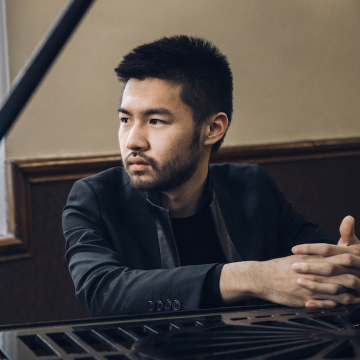
Conrad Tao (credit: Brantley Gutierrez)
Although cast as a symphony, the work functions in many ways as a piano concerto, and Conrad Tao served as both soloist and dramatic catalyst. His performance combined precision, rhythmic flexibility, and analytical clarity, qualities well suited to Bernstein’s shifting language of jazz idioms, modernist harmonies, and lyrical introspection.
Tao navigated the score’s rapid mood shifts with fluid command. In the more extroverted passages, his articulation remained crisp and controlled, while quieter episodes revealed a restrained lyricism that integrated closely with the orchestra. Rather than projecting the piano part as a heroic display, he treated it as a central, pivotal voice within Bernstein’s broader psychological landscape.
Spano shaped the symphony as a continuous emotional progression, emphasizing its uneasy transitions and fractured conversations rather than episodic spectacle. The Atlanta Symphony’s woodwinds provided some of the evening’s most compelling playing, particularly in passages where Bernstein’s orchestration evokes urban isolation and restless introspection.
The program’s effectiveness ultimately revealed itself in the dialogue between the two works. Both compositions center on wandering figures navigating uncertain worlds: Berlioz’s solitary traveler observing Italy through a Romantic lens, and, again, Bernstein’s anxious urban protagonists searching for meaning in wartime modernity. Each composer blurs conventional genre boundaries, both relying on recurring solo voices that function as psychological narrators.
Yet the contrasts proved equally revealing. Berlioz’s expansive landscapes and sensual orchestral palette reflected 19th-century Romanticism’s fascination with individual experience and the poetic reverie of a wandering dreamer, while Bernstein’s sharper rhythms and fragmented musical language captured a more unsettled, anxiously self-conscious modern world of postwar intellectualism.
The program was repeated on Saturday, May 9, at Symphony Hall. ■
EXTERNAL LINKS:
- Atlanta Symphony Orchestra: aso.org
- Robert Spano: robertspanomusic.com
- Zhenwei Shi: pittsburghsymphony.org
- Conrad Tao: conradtao.com

Read more by Mark Gresham.


.png)