

World premiere showcases Houston Symphony timpanist Leonardo Soto under Juraj Valčuha
March 20, 2026
Jones Hall
Houston, Texas – USA
Houston Symphony, Juraj Valčuha, conductor; Leonardo Soto, timpani.
Louise FARRENC: Overture No. 2 in E-flat major, Op. 24 (1834)
Andy AKIHO: Timpani Concerto (2026) (World premiere)
Ludwig van BEETHOVEN: Symphony No. 5 in C minor, Op. 67 (1808)
Lawrence Wheeler | 21 MAR 2026
Music Director Juraj Valčuha returned to Jones Hall to conduct the Houston Symphony in a 19th-century forgotten gem, a world premiere timpani concerto, and Beethoven’s ubiquitous Fifth Symphony.
Louise Farrenc’s Overture No. 2 (1834) opened the evening. A composer long overshadowed by her male contemporaries, Farrenc is only now regaining attention as a figure of real substance. The overture, though lacking a known program, suggests its own narrative arc: a dark, minor-key opening gives way to a confident and ultimately triumphant close. Its strengths lie in assured craftsmanship—clear formal design, effective orchestration, and a welcome variety of melodic and rhythmic ideas.
Valčuha treated the work with seriousness rather than as a mere curtain-raiser. The performance was disciplined and well shaped, allowing the music’s structural integrity to emerge. More than anything, it made the case that such “second-tier” repertoire often depends for its impact on the conviction of its execution.
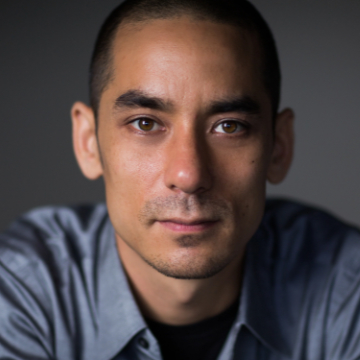
Composer Andy Akiho. (andyakiho.com)
The centerpiece of the program was the world premiere of Andy Akiho’s Timpani Concerto, written for Houston Symphony principal timpanist Leonardo Soto. Akiho, himself a virtuoso percussionist, exploits the instrument’s full expressive range in a work that is both inventive and immediately engaging. The concerto was the result of extensive collaboration between Akiho and Soto. Five timpani were placed front and center on stage, along with a flat-mounted bass drum and an inverted timpani shell.
The concerto’s three movements—”Sotogawa,” “Sotto voce,” and “Sottosopra”—each play on elements of Soto’s name. The first movement, titled “Sotogawa,” translates to “outer river” in Japanese. It is entirely for solo timpani and explores the outer reaches of its sound world. Prepared timpani heads produce variable pitch and resonance. As the preparations are removed, the timpani’s natural resonance is revealed.
The second, “Sotto voce,” means “under the voice” or “whispered.” It presents the timpani as a melodic instrument by means of a cantabile bass line beneath the orchestra. An ostinato note G is played by the hand chime, Thai nipple gong, and vibraphone. A lyrical clarinet melody is canonized and spreads through the orchestra, while the timpani provides the pulse. Pizzicato strings, sustained woodwind tones, brass punctuations, and a bluesy trombone solo complete the movement.
The finale, “Sottosopra” (“upside down”), flips the traditional orchestra-timpani relationship, with the timpani leading melodically and the orchestra providing the harmonic framework. It begins with double bass and harp—which happens to be a familial pairing in this orchestra. Hand-struck timpani set a faster tempo in five, while woodwind flourishes and a loud three-note figure give it a John Adams-like vibe. Akiho incorporates the huge Houston Symphony custom-made bell, the Mahler box and hammer, and a large chain that is repeatedly dropped, adding a theatrical element. After a timpani cadenza, the music drives to a close.
During his tenure, Soto has become a stalwart at the back of the Jones Hall stage, with rhythmically secure and tonally flexible playing. This concerto showcased the range of his technical and sonic capabilities, which he delivered with consummate virtuosity. Akiho has given us a brilliant timpani concerto with a contemporary yet accessible vernacular. The audience’s response to performer and piece was overwhelmingly positive, proving that new music, in and from the right hands, will always have a place.
Beethoven’s Fifth Symphony was premiered in Vienna, Austria on December 22, 1808. It began the second half of a four-hour concert that started with Beethoven’s Sixth Symphony and included Piano Concerto No. 4 and the Choral Fantasy. Beethoven conducted and played piano. Sorely under-rehearsed, the concert was nearly a disaster.
While we all know the story of the Eroica Symphony and the “program” for the Pastoral Symphony, it is widely assumed that the Fifth has none. I believe that assumption is a mistake. It is very much a product of its time, shaped by revolution and the Napoleonic Wars. Austria declared war on France three months later, and Vienna was surrounded the following month. Added to that was Beethoven’s increasing deafness, which led to thoughts of suicide.
With its famous first four notes, Beethoven’s Fifth Symphony is the best-known symphony ever written. Much has been said about its structure, themes, orchestration, and motivic unity, but the meaning behind the notes remains elusive. Beethoven’s dismissive comment about “fate knocking at the door” may have been made for his personal safety, given the political climate of the time.
One can find in the Fifth Symphony expressions of struggle on personal, national, and geopolitical levels. The main theme has been linked to Luigi Cherubini’s Hymne du Panthéon, which celebrated the French Revolution. (Cherubini lived in Paris at the time, and Beethoven even thought of moving to France.) The first movement presents conflicts of themes, harmonies, and orchestral sections. Consensus is eventually achieved, suggesting a decision to go to war to fight tyranny. A call for peace from the oboe gets overwhelmed by nationalistic fervor.
After declaring war, a nation has to assemble an army. The second movement, in A-flat major—and far removed from the C minor first movement—features two themes with variations. The first is a recurring love theme, one of Beethoven’s most touching expressions, perhaps representing a soldier saying goodbye to his beloved. The second has a military character—we hear a band as the soldier promises bravery and return. The lovers embrace in a tender farewell, and the quicker tempo at the end suggests his departure.
The third movement begins with the fearful anticipation before battle, complete with a nervous shiver. Marching to the battlefield with heavy steps, the soldier pleads to be spared. In the trio, soldiers charge in waves of musket-bearing groups, cheering as they go. The second advance hesitates. After the skirmish, the soldiers scatter. The fog of war brings uncertainty as to the victor. Tiptoeing signals and distant drums reveal no clear allegiance. As the smoke clears, victory is affirmed.

Houston Symphony music director Juraj Valčuha (jurajvalcuha.com)
The finale is orchestrated joy, with hymns of hallelujah and dancing in the streets. The return of the third-movement theme allows a moment of prayerful remembrance for those lost in battle. The oboe reminds us of its earlier plea—then the celebration resumes. Beethoven signs his name with three chords at the end.
Absent any explicit program, the symphony’s overarching progression from darkness to light can be understood emotionally. Performing this work is a test for any conductor or orchestra. For this listener, the results were mixed. The orchestral playing was beyond reproach. What seemed to be missing was a sense of humanity—the emotional connection that creates a shared experience. That must come from the podium.
While we now know what to expect, the opening of this symphony was shocking at its premiere. Using only strings and clarinets, Beethoven creates a dramatic declaration of uncommon power. The movement halts almost before it begins—a shocking innovation in symphonic writing. Under Valčuha, the fermatas were not given their full ‘wait’, with little pause before the main theme. The initial tempo felt slightly rushed but settled later. The important French horn parts were cleanly executed, and the oboe cadenza was expressively played by Jonathan Fischer.
Given the unexpected shift in key and mood, Valčuha appropriately took time before beginning the second movement. The opening theme was beautifully blended between violas and cellos, with excellent legato control. The fortissimo second theme was nobly presented. The E-flat fermata—intended as a false ending—was given a diminuendo, reducing the impact of the following pianissimo. The subsequent woodwind dialogue would have benefited from greater tenderness. Overall, the interpretation felt more literal than intuitive.
The “Scherzo and Trio” was brilliantly executed, with impressive cello and bass unisons and sparkling upper strings. With the addition of trombones, the finale was majestic and powerful. (The exposition repeat, though written and structurally integral, interrupts the narrative flow and is often omitted.) The third-movement reprise provided a moment of reflection. Valčuha expertly managed the multiple tempo transitions before driving to the stirring conclusion.
Throughout, the orchestra played at a high level—technically assured, tonally rich, and responsive. What seemed missing was a deeper sense of expressive urgency, the human element that transforms a fine performance into a memorable one. In a work as familiar as Beethoven’s Fifth, that distinction is everything.
The program is repeated Saturday evening and Sunday afternoon.
■
EXTERNAL LINKS:
- Houston Symphony: houstonsymphony.org
- Juraj Valčuha: jurajvalcuha.com
- Leonardo Soto: houstonsymphony.org/musicians/leonardo-soto/
- Andy Akiho: andyakiho.com

Read more by Lawrence Wheeler.

.png)