
March 5 & 7, 2026
Atlanta Symphony Hall
Atlanta, Georgia – USA
Atlanta Symphony Orchestra, Nathalie Stutzmann, conductor; Leif Ove Andsnes, piano.
Ludwig van BEETHOVEN: Piano Concerto No. 3 in C minor, Op. 37
Anton BRUCKNER: Symphony No. 6 in A major, WAB 106
Mark Gresham | 6 MAR 2026
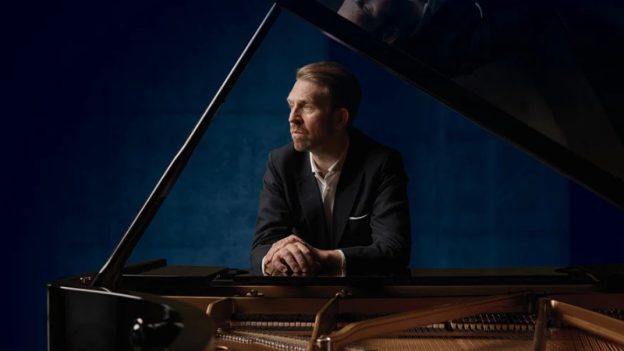
The Atlanta Symphony Orchestra’s program this week paired two works of very different expressive worlds: Beethoven’s Piano Concerto No. 3 and Bruckner’s Symphony No. 6. At Thursday night’s concert at Atlanta Symphony Hall, the orchestra was joined by Norwegian pianist Leif Ove Andsnes, making his Atlanta Symphony debut in the Beethoven, with music director Nathalie Stutzmann conducting.
The evening belonged largely to Andsnes, whose performance of Beethoven’s C-minor concerto demonstrated why he is widely regarded as one of the leading interpreters of the composer’s music. Beethoven’s Third Piano Concerto stands at a pivotal moment in the composer’s career: its outward classical balance still reflects Mozart’s influence, yet its dramatic rhetoric and bold harmonic gestures anticipate the heroic voice of the middle-period symphonies.
From the concerto’s opening movement, Andsnes shaped the piano’s entrance with a sense of inevitability rather than theatrical display. His playing favored clarity of line and structural understanding over overt virtuoso flash. Even in the more turbulent passages, the tone remained finely controlled, the articulation clean and purposeful.
The “Largo,” one of Beethoven’s most inward slow movements, emerged as the emotional center of the performance. Here, Andsnes spun the long melodic lines with luminous lyricism, drawing a wide palette of color from the instrument. The Atlanta Symphony players responded with attentive accompaniment, the winds in particular offering finely blended support.
The concluding ‘Rondo” restored the concerto’s restless energy. Andsnes handled the quicksilver exchanges between soloist and orchestra with deft rhythmic precision, bringing wit and buoyancy to the music’s playful turns.
I will continue to assert that Beethoven is simply not Stutzmann’s thing (though it is very much the orchestra’s), and her role in the concerto was largely serviceable, but the orchestra needed more steady focus than her baton delivered.
Set against the clarity of Andsnes, Stutzmann’s interpretation felt somewhat heavy in phrasing, regardless of dynamic contrasts. And her grossly overdone sfortzandos (one of her common malpractices) did not sharpen or impel the drama in the way the score invites. You don’t have to use a sledgehammer on a 10-penny nail to drive it home.
After intermission came Bruckner’s Symphony No. 6, a work less frequently performed than the composer’s better-known symphonies but nonetheless characteristic of his monumental style. Bruckner’s music unfolds in vast architectural spans, built from blocklike themes and surging brass climaxes.
The Atlanta Symphony Orchestra delivered the score with commitment and sonic weight. The brass section produced the noble chorales that anchor the symphony’s climactic moments, while the strings sustained the long crescendos that drive the music’s cumulative power.
Stutzmann is much more at home with Bruckner, in the sense of wallowing in its massiveness and grandeur, where her interpretation leaned toward heaviness, occasionally blurring the underlying rhythmic pulse that keeps Bruckner’s structures in motion. Still, the orchestra’s disciplined ensemble and rich sound, at times edging into blaring at peak moments, per Stutzmann’s penchant for doing so. But the orchestra itself carried the performance effectively, particularly in the finale’s sweeping closing pages.
If the Bruckner provided volumetric scale and sonic spectacle, it was Beethoven’s concerto that left the stronger artistic impression of the evening, thanks to Andsnes’ thoughtful, skilled playing, which illuminated the drama of one of Beethoven’s most significant early masterpieces.
The enthusiastic response brought Andsnes back for a short encore, a Chopin Mazurka played with understated elegance. Beethoven’s Third has become something of a calling card for the Norwegian pianist this season; after the Atlanta performances, he takes the concerto to Chicago, where he will perform it with the Chicago Symphony Orchestra on March 12–14 under conductor Jakub Hrůša.
But wait, there was more to the evening than the orchestral concert. Georgia State University students also performed a brief pre-concert program in the lobby as part of Panthers at the Symphony, a partnership between the Atlanta Symphony Orchestra and GSU launched last spring, which allows GSU students to present lobby concerts, attend ASO rehearsals, and receive masterclasses from orchestra musicians.
Thursday’s half-hour pre-concert performance featured a percussion quartet — Austin Mellen, Blaze Benavides, Nasir O’Daniel, and Dylan Mantione — playing the first part of Steve Reich’s Drumming, followed by a woodwind quintet performing Valerie Coleman’s Tzigane: flutist Emily Gabbitas, clarinetist Rachel Odendahl, oboist Sophia Monteagudo, hornist Terri Lynn Ingram, and bassoonist Jackelin Guevara-Blanco. The student performances offered an energetic prelude to an evening that ultimately belonged to Beethoven’s concerto and its thoughtful soloist, while the Bruckner appealed to a significant part of the audience that enjoys the feeling of size and saturation. ■
EXTERNAL LINKS:
- Atlanta Symphony Orchestra: aso.org
- Leif Ove Andsnes: leifoveandsnes.com
- Nathalie Stutzmann: nathaliestutzmann.com

Read more by Mark Gresham.



.png)