
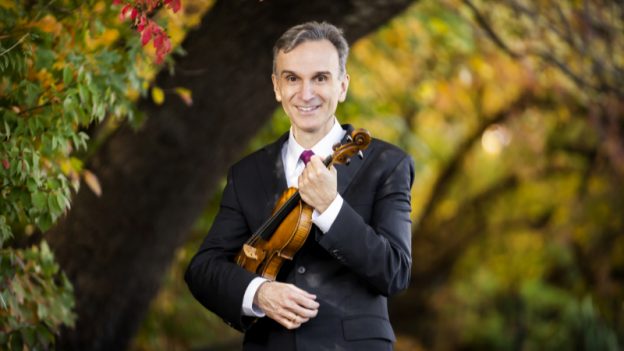
Gil Shaham, violin; Virginia Symphony Orchestra; Eric Jacobsen, conductor.
Samuel COLERIDGE‑TAYLOR: Violin Concerto in G minor, Op. 80
Antonín DVOŘÁK: Violin Concerto in A minor, Op. 53
Curtis STEWART: The Famous People, No. 2: F. Harper
Canary Classics CC27
Formats: CD, digital (download/streaming)
Release Date: March 13, 2026
Duration: 66 minutes
Giorgio Koukl | 6 MAR 2026
Violinist Gil Shaham needs little introduction. His constant output has been widely celebrated and has won numerous awards in the past. So a new release on Canary Classics, pairing the romantic Dvořák Violin Concerto with the Coleridge-Taylor, immediately catches our attention. The short piece by Curtis Stewart adds even more curiosity.
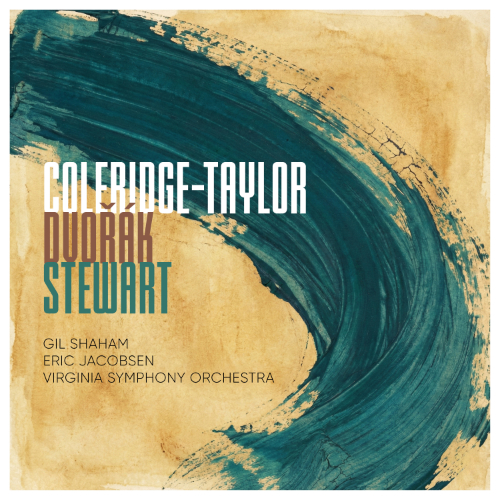
CC27 cover art
(click to enlarge)
This coupling of Coleridge-Taylor with the grand Czech master is not new in the CD world. It has been proposed before, and there is certainly a reason for this. On many occasions, Coleridge-Taylor’s admiration for Dvořák has been noted. There are even similarities in their styles, particularly in the lush orchestration and harmonic solutions.
Samuel Coleridge-Taylor’s Violin Concerto in G minor, Op. 80 (1912) is a pillar of late-Romantic instrumental music, celebrated for its “grandeur of cantabile spirit” and melodic richness. Completed shortly before the composer’s death, it was dedicated to and premiered by the American virtuoso Maud Powell, who called it “Taylor-made” for her style.
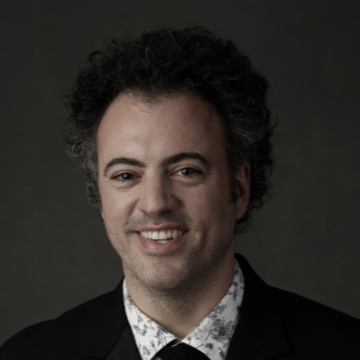
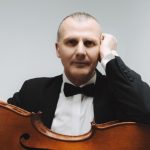
Eric Jacobsen
It has the classical three movements, starting with “Allegro maestoso.” The movement is defined by a horn figure and restless energy. It transitions between a solemn, soulful march and a more intimate, rhapsodic solo violin part. Gil Shaham has chosen a softer approach, never exaggerating the dynamics and preferring restraint over drama—a well-chosen attitude that continues into the second movement, called “Andante semplice.” It is the “heart” of the concerto: a lyrical, almost sentimental nocturne. Conductor Eric Jacobsen and his Virginia Symphony Orchestra are ideal partners for this soft approach.
The last movement, “Allegro molto,” radiates happiness and intelligence, driven by infectious rhythmic energy and syncopation. Here, we can admire the soloist’s impeccable intonation and full bow control.
Dvořák’s Violin Concerto is considered one of the greatest violin concertos of the 19th century—and rightly so, as it radiates lyrical beauty and Czech folk energy on every page of the score. The concerto was written for the legendary violinist Joseph Joachim. Although Dvořák revised it extensively based on Joachim’s feedback, the violinist never actually performed it in public, reportedly finding the structure too “modern” or the orchestration too thick. The premiere was instead given by František Ondříček in Prague in 1883. For some reason, this music never achieved the same popularity as the Cello Concerto, but despite this, it has been recorded extensively.
Here, Shaham is at his peak quality, clearly enjoying the music, especially in the first and last movements.
Unusually for the time, Dvořák did not include a stand-alone, show-off cadenza for the soloist, preferring to keep the technical displays integrated into the musical narrative. Being a violinist himself, he certainly knew how to write for the instrument.
Once again, the orchestra is a valid partner, though at times the sound engineers keep it slightly too low in dynamics.
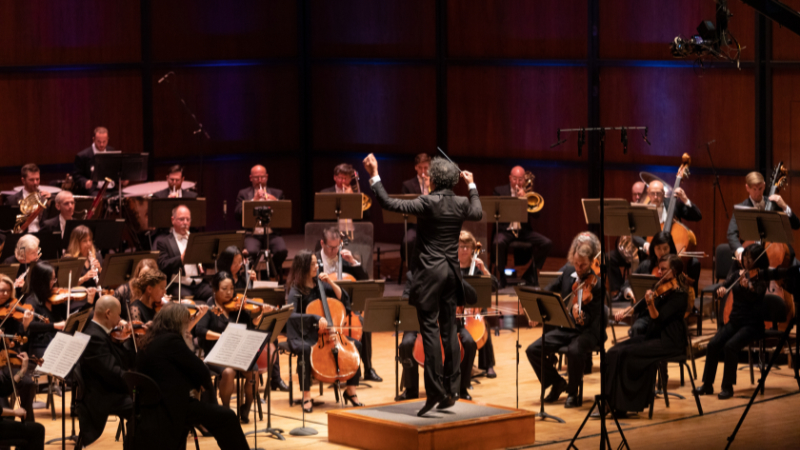
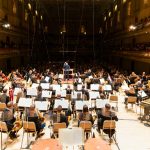
Virginia Symphony Orchestra
The last five minutes are dedicated to the world-premiere recording of the American composer Curtis Stewart’s piece, “F. Harper.”
The music is pleasant, fitting well into the panorama of the preceding scores and certainly well written for the soloists.
In the short booklet, the composer explains the connection—somewhat tenuous—between “Slav” music and the English word “slave,” a hint at the ordeal of African Americans in the past. He tries to explain that many Czech names end in “-slav,” such as Jaroslav or Bohuslav. However, this linguistic leap is mistaken: the “-slav” roots come from the Old Slavonic word slava, meaning “glory.”
But this has nothing to do with the music’s quality, which is considerable. One only has to recall that the last century saw many experimental developments in the composer’s world, bringing figures like Arnold Schönberg and György Ligeti, just to name a few.
Here, we find a sort of “neo-Romantic” world, with only occasional signs of this century, such as the opening glissandi and the extensive use of percussion
Certainly, a welcome occasion for all interpreters to display their bravura once again. ■
EXTERNAL LINKS:
- Gil Shaham: gilshaham.com
- Eric Jacobsen: jacobseneric.com
- Virginia symphony Orchestra: virginiasymphony.org

Read more by Giorgio Koukl.



.png)